For B2B buyers in gas processing and compressed air systems, achieving ultra-low dew points is critical to prevent moisture damage in pneumatic controls, pipeline instrumentation, and sensitive processes. Standard refrigerant dryers cannot reach these levels. A desiccant dryer is the go-to solution for demanding applications requiring dew points below 0°C.
A desiccant dryer is a compressed air treatment device that uses hygroscopic materials—such as activated alumina or molecular sieves—to adsorb water vapour from compressed air. It can consistently deliver pressure dew points between -40°C and -70°C, far below what refrigeration dryers achieve.
This article provides a comprehensive guide to desiccant dryer technology, selection criteria, industrial applications, and maintenance practices to help engineers and procurement teams make informed purchasing decisions.
Working Principles and Types of Desiccant Dryers
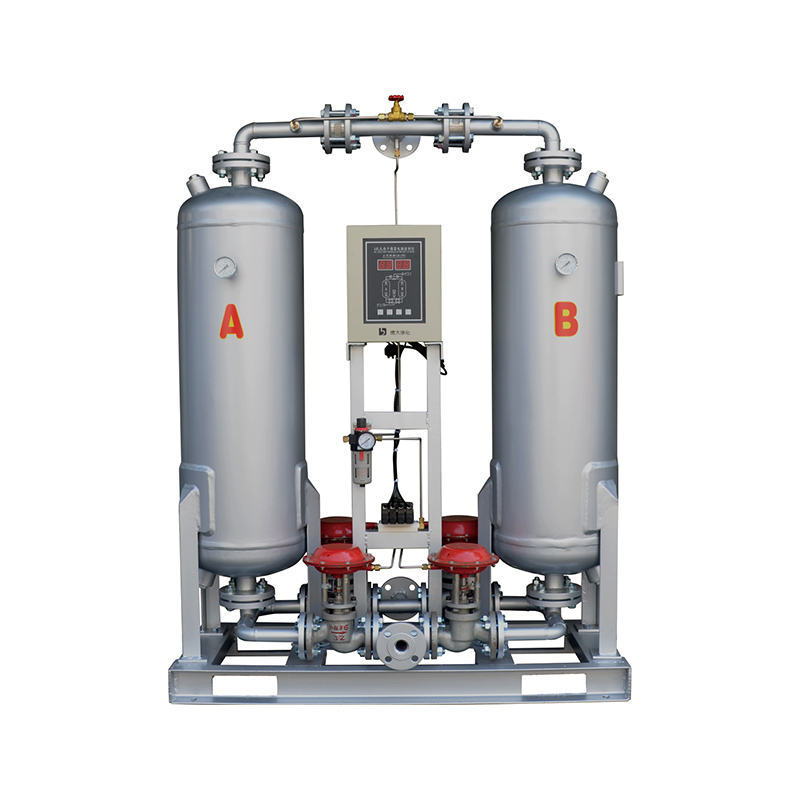
Desiccant dryers remove water vapour through adsorption — a physical process where moisture molecules bond to the surface of a hydrophilic material. In a twin-tower configuration, one chamber dries the compressed air while the other regenerates it. The switching cycle between towers determines the dryer type and its performance characteristics.
Three main designs dominate the market. Each trades off purge air consumption against energy input and dew point stability.
Heatless (Pressure Swing) Dryers
– Use a portion of the dried compressed air for regeneration at near-ambient temperature
– Typical purge flow: 12-20% of rated capacity
– Achieve -40°C ADP
– Best for low to medium flow where simplicity and low capital cost matter
Heated (External Heat) Dryers
– Apply electric or steam heaters for regeneration
– Purge consumption: 4-8%
– Deliver consistent -40°C to -52°C ADP
– Common in continuous-duty industrial plants
– Higher upfront cost, lower lifetime energy expense
Blower Purge Dryers
– Use a separate blower with a heater for regeneration
– Purge air consumption: 1-3%
– Maintain -40°C PDP reliably
– Designed for large-scale applications: pipeline gas drying, steel mills, offshore platforms
| Parameter | Heatless | Heated | Blower Purge |
|---|---|---|---|
| Purge air consumption | 12-20% | 4-8% | 1-3% |
| Typical dew point | -40°C to -70°C | -40°C to -70°C | -40°C |
| Relative energy use | High | Medium | Low |
| Best application | Small to mid-scale | Continuous industrial | High-volume / remote |
Key Selection Criteria for Industrial Desiccant Dryers
Start with the airflow and pressure requirements. Your compressor’s rated flow in Nm³/min or SCFM sets the dryer size. Apply a safety margin of 10-15% for future expansion or pressure drop. Operating pressure directly affects drying capacity: at 7 bar(g), a unit delivers rated dew point, but lower pressures may require a larger vessel. Inlet temperature must be ≤35°C for most heatless designs; hotter air reduces adsorbent capacity. Your target pressure dew point determines the purge strategy: -40°C ADP typically needs 15-18% purge for heatless, while -70°C requires 20-25%. Demand-based controllers can cut purge by 30-50%.
| Criterion | Heatless | Heated | Blower Purge |
|---|---|---|---|
| Purge consumption | 15-25% | 6-10% | 2-7% |
| Typical dew point | -40°C | -40°C to -52°C | -40°C to -70°C |
| Pressure drop (bar) | 0.2-0.3 | 0.32-0.3 | 0.3-0.5 |
| Vessel material | Carbon steel; stainless for corrosive gas | Carbon steel or stainless | Carbon steel or stainless |
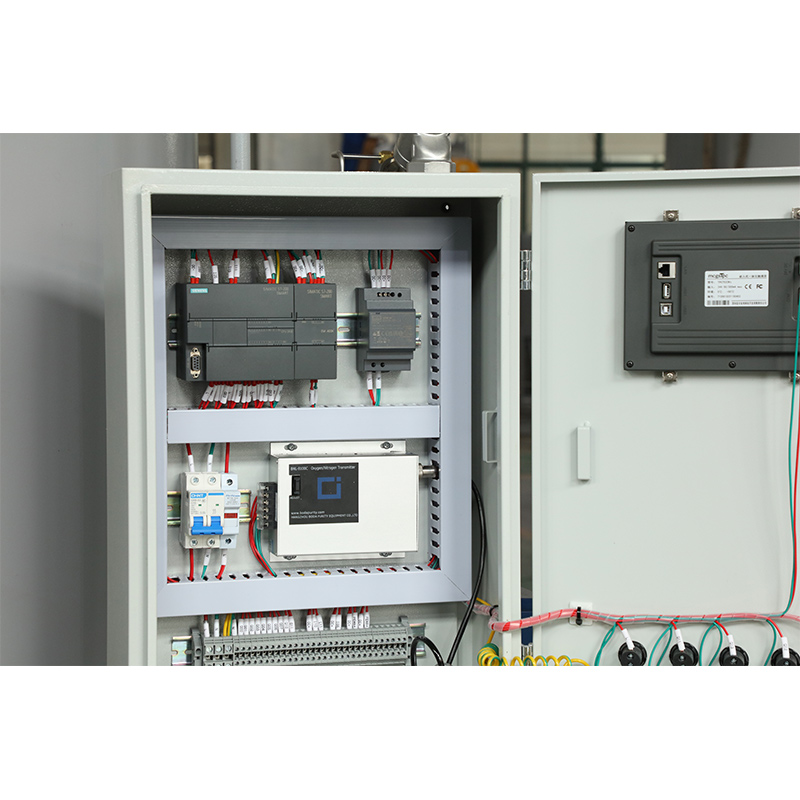
Low-pressure-drop designs (under 0.3 bar) reduce compressor load. Material choice matters: carbon steel is standard; specify 304L/316L stainless for wet sour gas or coastal environments. Controller options range from a basic timer to a PLC with dew point feedback. Spare part lead times for desiccant, valves, and heaters should be checked. Over five years, the total cost of ownership is split roughly as follows: 40% purchase, 30% purge energy, 20% maintenance, and 10% installation.
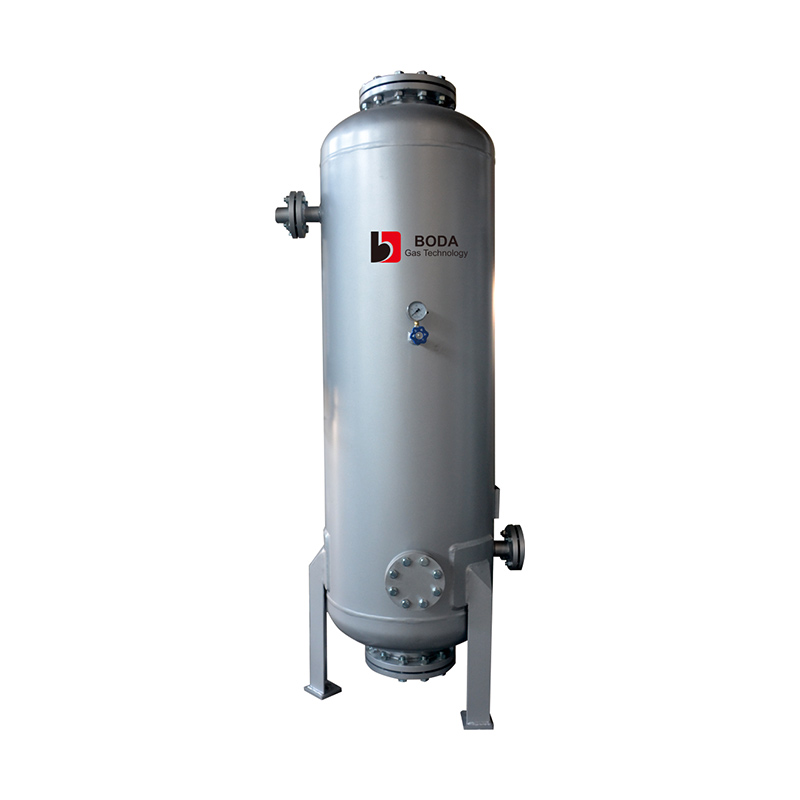
Manufacturers such as BODA Gas (Hangzhou Boda Purity Equipment Co., Ltd.) offer a complete line of desiccant dryers, including heatless (ADL series), micro-heat (ADH series), and combination low dew point (FAG series) models. With over 24 years of industry experience and ISO 9001 certification, BODA Gas provides reliable solutions for various industrial needs.
Industrial Applications and Performance Requirements
Each industry sets a specific atmosphere dew point (ADP) target. Desiccant dryers are often the only technology that can meet it consistently.
- Oil & gas — Pipeline gas and instrument air need -40°C or lower ADP.
- Chemical & petrochemical — Process air for conveying and catalyst protection requires stable -40°C ADP.
- Pharmaceutical — Sterile air for cleanrooms must meet GMP dryness, typically -40°C ADP.
- Food & beverage — Packaging and bottle blowing need -40°C ADP to prevent mould.
- Electronics — PCB soldering and wafer handling demand -60°C to -70°C ADP.
- Marine — Shipboard pneumatic controls require -40°C ADP to prevent corrosion.
Wherever standard dew points cause product loss or equipment risk, desiccant drying is the specified solution.
Maintenance Practices to Extend Desiccant Dryer Life
Regular maintenance directly determines whether your desiccant dryer delivers -40°C for five years or fails within eighteen months. Common failure modes: desiccant dusting, oil contamination, valve seal wear, and control timer drift.
Weekly and Monthly Checklist
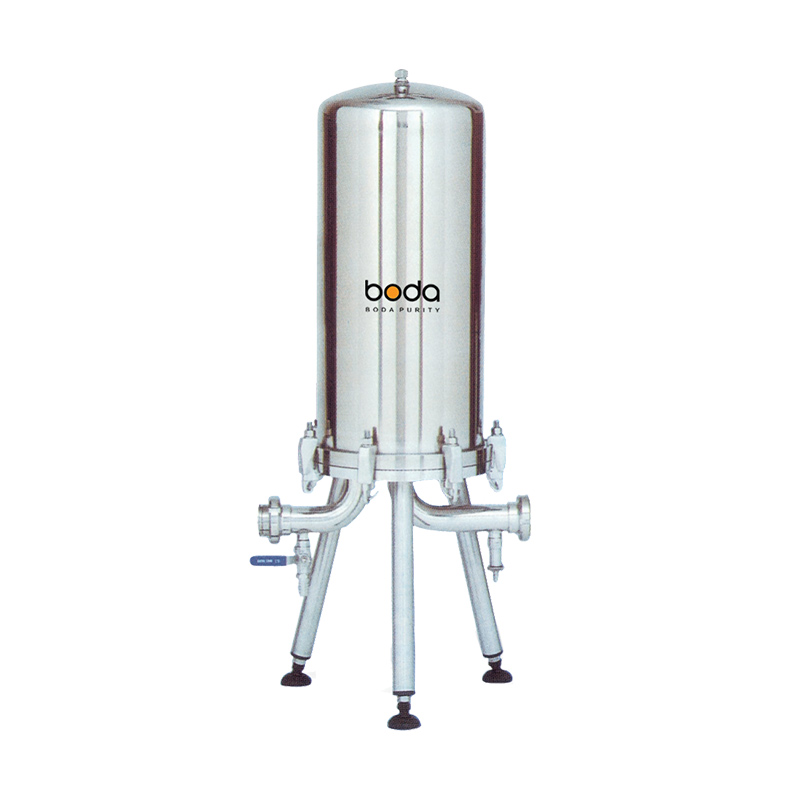
- Check pre-filter ΔP; replace elements when ΔP exceeds 0.5 bar.
- Drain condensate from the pre-filter and aftercooler.
- Verify purge flow rate using a rotameter; confirm it stays within the manufacturer’s range (12-18% for heatless).
- Inspect the desiccant every six months for discolouration or fines.
- Monitor dew point transmitter; a 5°C rise above target signals desiccant saturation.
Troubleshooting Common Symptoms
- Low dew point: Check pre-filter pressure drop and purge timer. If correct, replace desiccant (typical life 3-5 years at 38°C inlet).
- High purge consumption: Often caused by purge valve leakage or a misadjusted timer. Measure purge exhaust temperature; warm outlet during repressurisation indicates leakage. Replace valve seals or recalibrate controller.
Predictive maintenance with continuous dew point monitoring pays for itself.
FAQ and Conclusion
What pressure dew point should I specify?
For general instrument air, ISO 8573-1 Class 2 (-40°C) is standard. Specialty applications may require Class 1 (-70°C). Lower targets increase purge consumption and desiccant volume.
How long does a desiccant charge last?
Activated alumina: 3-5 years; molecular sieves: 2-3 years. Oil contamination halves life. Monitor dew point trend; replace if outlet rises 5°C above target.
What causes high purge consumption?
High inlet temperature, worn purge orifices, or lack of dew point demand control. Retrofitting a dew point sensor can reduce purge by 35-50%.
Selecting the right desiccant dryer specification saves energy and downtime. Prepare your operating parameters and evaluate suppliers like BODA Gas, which provides durable, certified equipment and global spare parts support.
Contact BODA Gas
- BODA GAS TECH
- HANGZHOU BODA PURITY EQUIPMENT CO., LTD.
- You can find us by follows:
- Lemon Du
- Tel./Whatsapp/Wechat: +86-15755150162
- Email: bodagas2002@gmail.com