Industrial users often face the same problem: the oxygen generator can produce gas, but the oxygen density, flow, pressure, or purity may not remain stable under changing loads. An undersized system increases operating costs. Poor compressed-air quality can damage the zeolite molecular sieve and reduce separation efficiency. Incorrect cycle settings can also cause nitrogen breakthrough and off-specification oxygen. These problems affect production continuity, product quality, and maintenance costs. A practical solution starts with the application rather than the equipment nameplate. Buyers should define the required oxygen purity, flow rate, outlet pressure, dew point, operating hours, and ambient conditions before selecting an oxygen gas generator manufacturer. BODA GAS designs PSA oxygen systems around these operating requirements.
The right PSA oxygen generator should be selected by required oxygen purity, flow, pressure, dew point, operating profile, and application standards—not by equipment price alone. BODA GAS combines PSA separation technology, compressed-air treatment, automatic control, and customized engineering to provide stable on-site oxygen production.
To make the selection practical, the following sections examine the PSA process, key technical parameters, oxygen density, air-treatment requirements, sizing, control strategy, and common purity problems. These factors explain what do oxygen generators do in real industrial applications and how buyers can evaluate a complete system.
Why Is Oxygen Purity More Important Than Simply Buying an Oxygen Generator?
A PSA oxygen generator does not create oxygen chemically. It separates oxygen from atmospheric air by exploiting the different adsorption characteristics of nitrogen and oxygen on a molecular sieve. BODA GAS describes its BXO PSA oxygen generator as a system using zeolite molecular sieves to separate oxygen and nitrogen under pressure. Its published standard range includes oxygen output of approximately 1–200 Nm³/h, oxygen purity of 93±3%, adjustable oxygen pressure, and oxygen dew-point options.
The technical objective is therefore not simply to produce gas. It is to produce the required oxygen concentration at the required flow and pressure continuously. In industrial procurement, oxygen density is sometimes used informally to describe oxygen concentration or enrichment. For engineering specifications, however, buyers should clearly state oxygen concentration or purity, normally expressed as a percentage by volume.
PSA oxygen production normally follows this sequence:
- Compressed-air intake: Atmospheric air is compressed to the required operating pressure.
- Air purification: Filters and a dryer remove particles, water and oil aerosols that could damage the adsorbent.
- Pressurized adsorption: The molecular sieve preferentially adsorbs nitrogen while oxygen passes through as the product gas.
- Depressurization and regeneration: The adsorbent releases nitrogen and returns toward its adsorption capacity.
- Alternating tower operation: Multiple adsorption towers operate in cycles to maintain continuous oxygen production.
- Oxygen storage and regulation: A buffer tank and control system stabilize the product supply before the gas reaches the application.
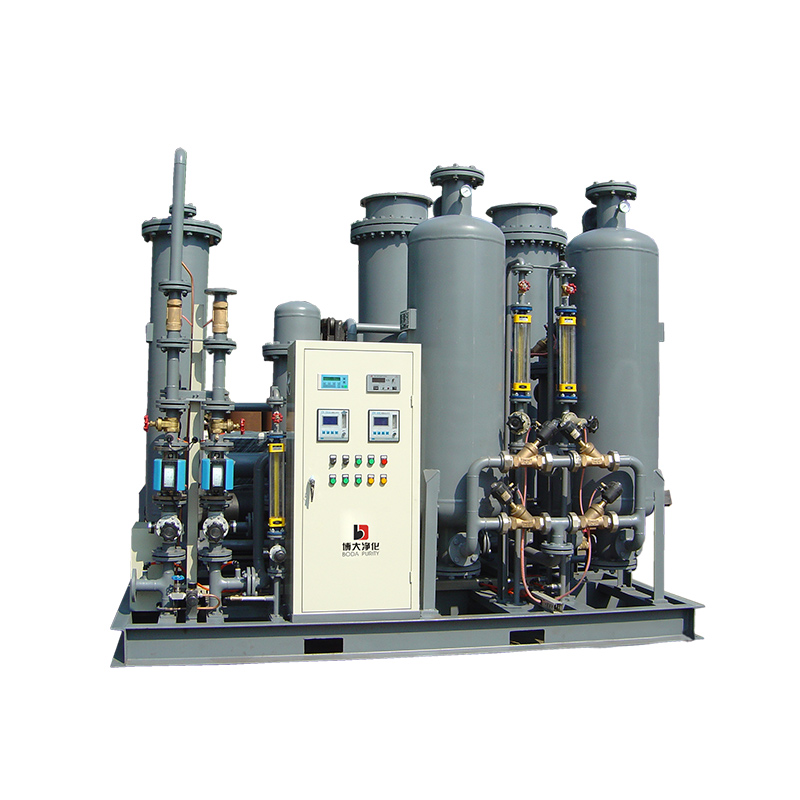
This operating principle explains why a complete system requires more than adsorption vessels. The air compressor, air dryer, precision filters, adsorption towers, molecular sieve, oxygen buffer tank, valves, PLC, analyzer, piping, and safety devices all influence final performance.
Why Must Oxygen Purity, Flow, Pressure, and Dew Point Be Specified Together?
A common procurement mistake is to request “a 93+-3% oxygen generator” without specifying the corresponding flow rate and pressure. Purity cannot be evaluated independently of production capacity. BODA GAS lists oxygen capacity, oxygen purity, oxygen pressure, oxygen dew point, application, and environmental conditions as key selection factors. Its published BXO range also notes that performance depends on specified compressed-air conditions.
| Parameter | Typical BODA PSA Reference | Procurement Consideration |
|---|---|---|
| Oxygen capacity | 1–200 Nm³/h for the published BXO range | Match actual continuous and peak demand |
| Oxygen purity | 93±3% standard reference | Define minimum acceptable concentration |
| Oxygen pressure | Approximately 0.1–0.7 MPa adjustable | Confirm process pressure and booster requirement |
| Oxygen dew point | -20°C to -60°C options | Select according to downstream process requirements |
Flow should be calculated from actual consumption rather than theoretical maximum demand. If a system operates permanently above its rated production capacity, oxygen purity may fall because the adsorption cycle no longer has enough separation margin. Conversely, selecting excessive capacity increases capital expenditure and may leave the equipment operating inefficiently at low load.
Pressure must also be considered at the point of use. If the process requires pressure above the normal PSA outlet range, an oxygen booster may be required. BODA GAS states that a booster can be added when higher-pressure oxygen is needed, including applications involving high-pressure cylinder filling.
Why Is Compressed-Air Quality Critical to PSA Oxygen Generator Performance?
The molecular sieve is the heart of the PSA separation process, but it is also vulnerable to contaminated feed air. Water, oil, and particulates can reduce adsorption performance and shorten adsorbent life. For this reason, the air-treatment section should be considered part of the oxygen generation system rather than an optional accessory.
The practical configuration normally includes:
- Air compressor sized for the required oxygen production.
- Aftercooler and condensate drainage to control liquid water.
- Coalescing filters to remove oil aerosols and fine particles.
- Activated-carbon filtration where deeper oil removal is required.
- Compressed-air dryer selected according to the required dew point.
- Final filtration to protect the PSA vessels and downstream oxygen system.
Published PSA troubleshooting guidance identifies feed-air degradation as an important cause of oxygen purity decline. Water vapor can reduce molecular-sieve performance, while oil carryover can contaminate adsorption sites. The same guidance recommends checking dryer performance, filters, pressure dew point, and oil removal before replacing the molecular sieve.
This is why an experienced oxygen gas generator manufacturer should evaluate the complete compressed-air system. A PSA vessel cannot compensate for consistently poor feed-air quality. BODA GAS also emphasizes the testing of molecular-sieve batches and designing with an operating margin to reduce short-term performance degradation.
Why Should Buyers Compare Industrial Oxygen Generators by Application?
Different industries do not necessarily require the same oxygen specification. A glass furnace, wastewater aeration system, metal-cutting line, hospital oxygen system, and aquaculture installation can have very different requirements for purity, flow, pressure, cleanliness, noise, redundancy, and control.
| Application | Typical Selection Priority | Important Design Factors |
|---|---|---|
| Metal cutting and welding | Stable purity and sufficient flow | Continuous demand, pressure, gas distribution |
| Glass manufacturing | Stable oxygen supply | Large continuous flow, automation, reliability |
| Wastewater treatment | Efficient oxygen enrichment | Flow control, energy consumption, operating hours |
| Aquaculture | Continuous oxygen availability | Low operating cost, compact design, monitoring |
| Medical applications | Applicable medical requirements | Purity, cleanliness, monitoring, redundancy, applicable standards |
For medical applications, standards must be identified according to the exact equipment and supply-system configuration. ISO 10083:2006 addressed oxygen concentrator supply systems for medical gas pipeline systems and specified systems producing oxygen-enriched air with an oxygen concentration of at least 90%, but that edition is now withdrawn and replaced in the relevant framework by ISO 7396-1:2016. For individual medical oxygen concentrator equipment, ISO 80601-2-69:2026 is a current international standard covering basic safety and essential performance requirements.
Therefore, a procurement specification should never simply state “medical oxygen generator.” It should identify the applicable market regulations, product classification, purity requirement, gas pipeline requirements, testing requirements, and certification pathway.
How Does an Oxygen Generator Maintain Stable Oxygen Density?
Stable oxygen concentration depends on maintaining the PSA cycle within its designed operating window. The main variables include adsorption pressure, cycle time, regeneration pressure, feed-air flow, oxygen product flow, valve response, and molecular-sieve condition.
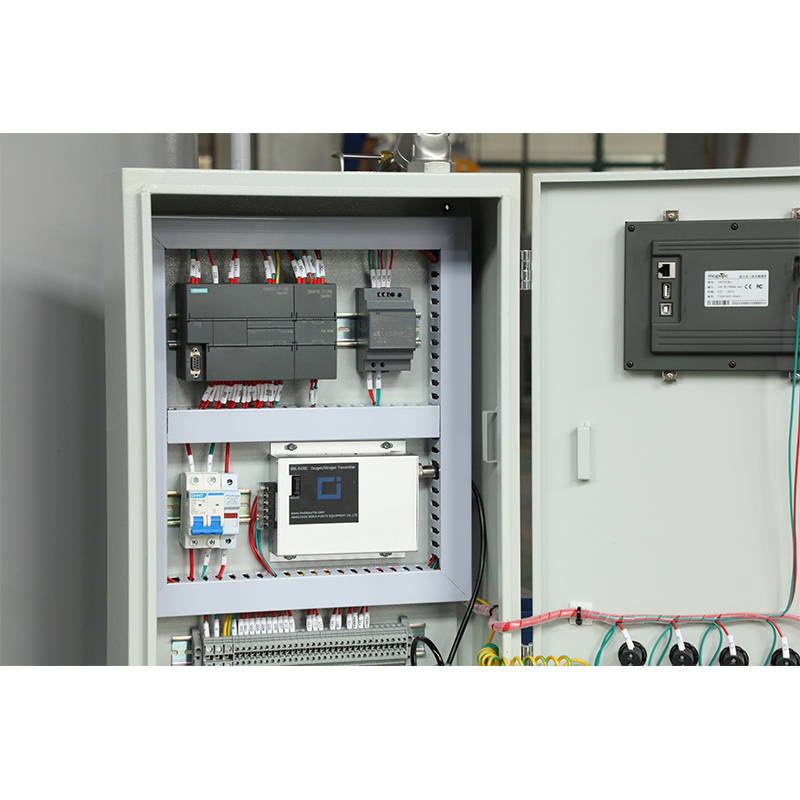
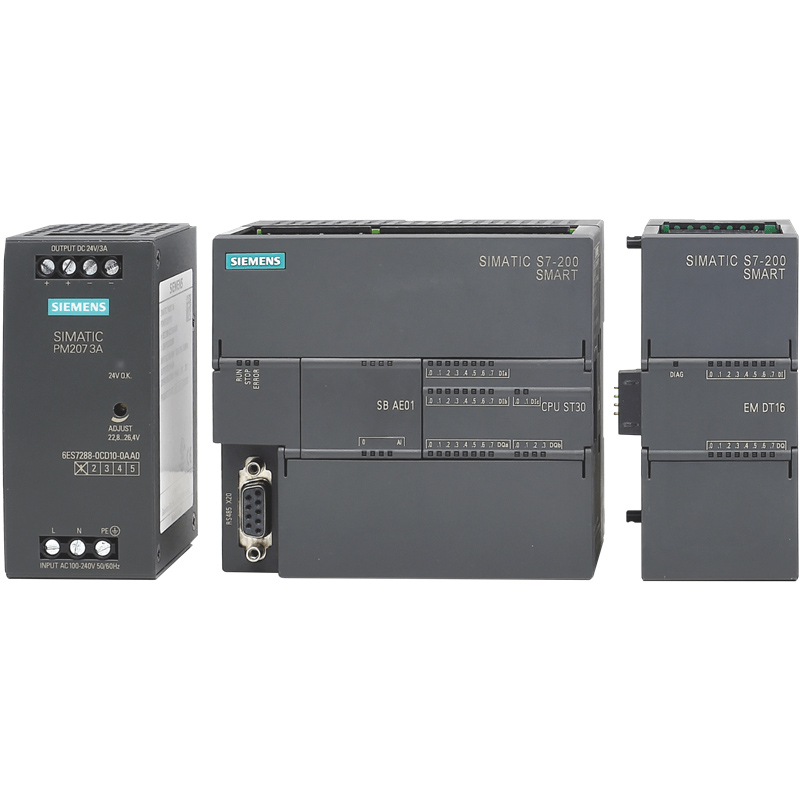
Automatic control is particularly important for industrial systems. A PLC can coordinate valve switching, monitor pressure and oxygen concentration, and generate alarms when operating conditions move outside defined limits. Optional functions may include oxygen purity monitoring, dew-point detection, remote monitoring, energy-saving control, temperature monitoring, and industrial communication protocols. BODA GAS lists MODBUS, Ethernet, and Profibus communication options for its BXO PSA oxygen generator.
When oxygen purity falls, operators should not immediately change the PSA cycle. A systematic diagnostic sequence is safer:
- Verify the oxygen analyzer calibration.
- Check the sample line for leakage or contamination.
- Confirm actual oxygen flow against the design capacity.
- Check adsorption pressure and valve operation.
- Verify PLC cycle timing against commissioning parameters.
- Check compressed-air pressure and dew point.
- Inspect filters for oil and particulate loading.
- Evaluate molecular-sieve condition only after upstream causes are eliminated.
Recent troubleshooting guidance recommends establishing a baseline of purity, flow, adsorption pressure, cycle time, dew point, and ambient conditions before making adjustments. It also notes that excessive flow and deviations from original PSA cycle settings can reduce oxygen purity.
What Do Oxygen Generators Do in Modern Industrial Plants?
The basic answer is simple: oxygen generators separate oxygen from atmospheric air and provide an on-site oxygen supply. The engineering value is broader. On-site generation can reduce dependence on delivered cylinders or bulk oxygen and can provide a controlled supply matched to the production process.
Typical applications include:
- Metal fabrication: oxygen for cutting and related combustion processes.
- Glass production: oxygen enrichment for combustion efficiency.
- Wastewater treatment: oxygen enrichment for biological treatment and aeration.
- Ozone production: oxygen feed gas for ozone-generation equipment.
- Aquaculture: oxygen enrichment to support controlled aquatic environments.
- Chemical processing: oxygen for oxidation and other process requirements.
BODA GAS identifies these and other applications for its PSA oxygen generator product range, including hospitals and clinics, glass industry, water treatment, aquaculture, plasma cutting, welding, wire-electrode cutting, and ozone applications.
How Much Is an Oxygen Concentrator Compared With a PSA Oxygen Plant?
The question “how much is an oxygen concentrator” cannot be answered accurately from oxygen purity alone. Equipment price depends on capacity, application, pressure, air-treatment configuration, automation, redundancy, materials, certification, installation scope, and whether the buyer needs a small concentrator or an industrial PSA oxygen plant.
A useful procurement cost model includes:
- Initial equipment cost — PSA unit, compressor, dryer, filters, controls and storage.
- Installation cost — piping, electrical work, foundations and commissioning.
- Energy cost — primarily compressor and auxiliary-system consumption.
- Maintenance cost — filters, valves, sensors and molecular-sieve replacement.
- Downtime cost — especially important for continuous industrial processes.
- Gas logistics cost — relevant when comparing on-site generation with delivered oxygen.
For this reason, buyers should request a complete technical quotation rather than comparing only the purchase price of the oxygen generator itself. BODA GAS provides customized oxygen-generation engineering based on application requirements, including capacity, purity, pressure, and other operating conditions.
FAQ: Common Questions About Oxygen Concentrators and PSA Oxygen Generators
1. What is the normal oxygen purity of a PSA oxygen generator?
Many industrial PSA oxygen systems are designed around approximately 93±3% oxygen, although the actual specification depends on the application and equipment design. BODA GAS publishes 93±3% as the standard purity reference for its BXO PSA oxygen generator range, with customized configurations available.
2. Why does oxygen purity decrease during operation?
Common causes include low adsorption pressure, excessive oxygen flow, incorrect cycle timing, valve leakage, wet compressed air, oil contamination, analyzer error, and molecular-sieve degradation. Troubleshooting should begin with measurement verification and operating conditions before replacing the adsorbent.
3. How often should the molecular sieve be replaced?
The universal replacement interval is 5-8years. Service life depends on feed-air quality, temperature, pressure cycling, operating hours, gas velocity, and maintenance. Evaluate the molecular sieve using actual purity trends, pressure behavior, operating hours, and inspection findings rather than replacing it solely on a calendar schedule.
4. Can a PSA oxygen generator produce high-pressure oxygen?
Yes, but the PSA generator and high-pressure filling system perform different functions. When the required oxygen pressure exceeds the normal generator outlet pressure, an oxygen booster can be integrated. BODA GAS states that booster configurations can support high-pressure applications, including cylinder filling.
5. What should I provide to an oxygen gas generator manufacturer for quotation?
Provide at least the required oxygen purity, flow rate in Nm³/h, outlet pressure, operating hours, application, ambient temperature, altitude, available electrical power, installation environment, and applicable standards or certifications. If the demand varies, provide both average and peak consumption. This allows the manufacturer to size the compressor, dryer, PSA vessels, storage tank, and booster correctly.
6. Is oxygen density the same as oxygen purity?
Not exactly. In technical specifications, oxygen purity or oxygen concentration is the clearer term. “Oxygen density” may be used informally in marketing or conversation, but it should not replace a defined concentration specification when purchasing equipment.
7. How can I choose between different oxygen generator manufacturers?
Compare the complete technical scope rather than the headline price. Review the manufacturer’s PSA design experience, molecular-sieve management, air-treatment configuration, automation system, testing procedures, documentation, customization capability, commissioning support, spare-parts strategy, and applicable certifications. BODA GAS states that it has manufactured PSA nitrogen and oxygen generators since 2002 and provides customized engineering, installation guidance, commissioning, and training services.
Conclusion
Choosing a PSA oxygen generator requires more than comparing oxygen purity or equipment price. Define purity, flow, pressure, dew point, application, standards, and lifecycle cost first. BODA GAS can provide a customized technical solution based on your operating conditions. Contact our engineering team with your oxygen demand for a detailed selection and quotation.