Industrial operations often require a reliable nitrogen supply, but traditional delivery methods—cylinders and liquid dewars—bring hidden costs. Delivery fees, rental charges, and evaporation losses can inflate your gas bill by 30% or more. Frequent change-outs disrupt production schedules and introduce handling risks. You need a more predictable, cost-effective solution that keeps your line running without vendor dependency.
An industrial nitrogen generator is an on-site system that produces nitrogen gas from compressed air using technologies such as pressure swing adsorption (PSA), membrane separation, or cryogenic distillation, ensuring a continuous, cost-effective supply at the desired purity.
This guide provides a comprehensive overview of industrial nitrogen generators, compares the main technologies, outlines selection criteria, and explains the business case for on-site generation.
PSA, Membrane, and Cryogenic: A Comparison of Industrial Nitrogen Generator Technologies
Three core technologies dominate industrial nitrogen generation: pressure swing adsorption (PSA), membrane separation, and cryogenic distillation. Each delivers nitrogen at different purities, flow rates, and costs. Understanding their differences is essential before you invest.
Here is a side-by-side comparison of the key specifications:
| Technology | Purity Range | Flow Rate Range (Nm³/h) | Footprint | Energy Consumption (kWh/Nm³) | Best-Fit Industries |
|---|---|---|---|---|---|
| PSA | Up to 99.999% (≤10 ppm O₂) | 1 – 2,500 | Moderate | 0.30 – 0.45 | Food packaging, electronics, pharmaceuticals, chemical blanketing |
| Membrane | Up to 99.9% (1,000 ppm O₂) | 1 – 1,000 | Compact | 0.25 – 0.35 | Marine, oil & gas, tyre inflation, fire suppression, aquaculture |
| Cryogenic | Up to 99.9999% (<1 ppm O₂) | 100 – 10,000+ | Large | 0.45 – 0.65 | Steelmaking, large-scale chemical plants, LNG, bulk distribution |
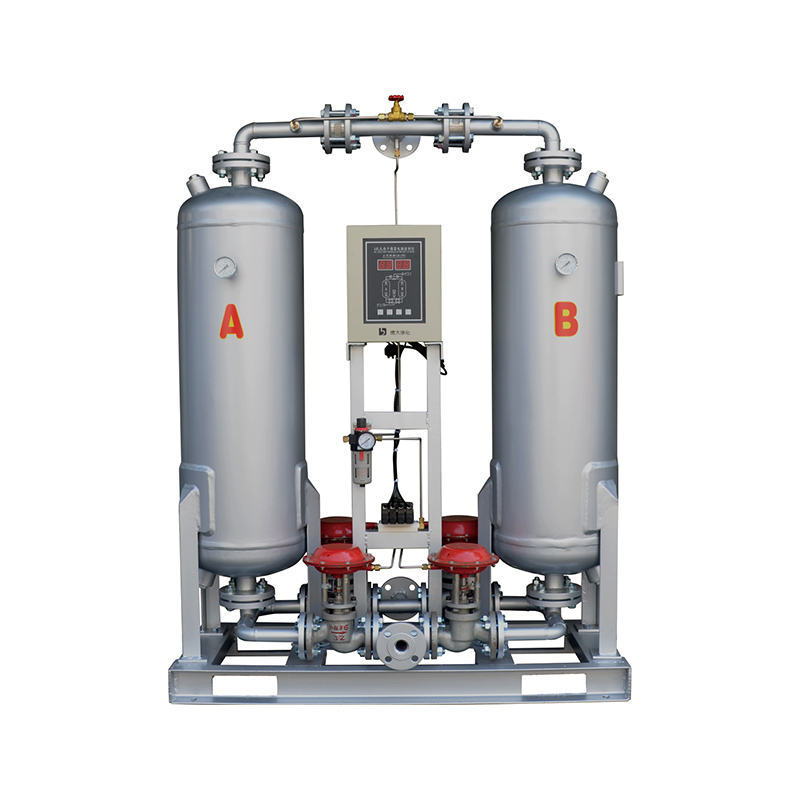
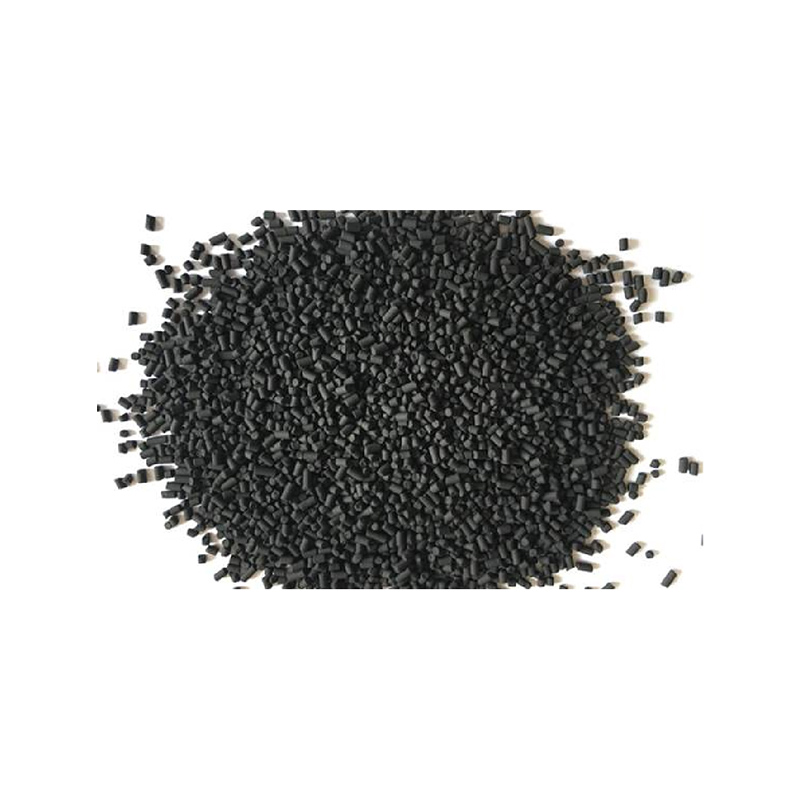
PSA generators use carbon molecular sieves to adsorb oxygen under pressure, releasing high-purity nitrogen. They are the best choice when you need 99.5% to 99.999% purity at moderate flow rates. A PSA unit typically occupies a floor area similar to a pallet and operates with two alternating vessels for continuous output.
Membrane generators separate gases using hollow fibre membranes. Oxygen and water vapour permeate out faster than nitrogen, leaving a dry gas stream at up to 99.9% purity. Membranes are compact, have no moving parts, and start producing nitrogen within seconds. They suit applications where the purity requirement is moderate and the duty is intermittent.
Cryogenic distillation cools air to cryogenic temperatures (−196°C) to separate nitrogen as a liquid. It handles very high flow rates and achieves the highest purities, but requires substantial capital investment, a large footprint, and skilled operation. Only consider this route if you need above 500 Nm³/h or liquid nitrogen as a byproduct.
As a general rule: membranes fit lean applications, PSA fits clean applications, and cryogenic fits bulk applications. For reference, BODA Gas offers both the BXN (PSA) and BSN (membrane) series, covering the mid-range of the market. When evaluating suppliers, request site-specific data on ambient temperature and pressure dew point, as these directly affect real-world performance.
Key Selection Criteria for Industrial Nitrogen Generators: Purity, Flow, and Total Cost of Ownership
Choosing the right industrial nitrogen generator starts with matching three core parameters to your actual demand. Get one wrong, and you either overspend on capacity or compromise production quality.
Required purity: This is your starting point. Food packaging runs at 99.9% nitrogen. Electronics soldering requires 99.999% or higher. Laser cutting sits around 99.99%. Calculate your target by identifying the most demanding process in your facility — that sets the baseline. Over-specifying purity by 0.1% can raise energy consumption by 15-20%.
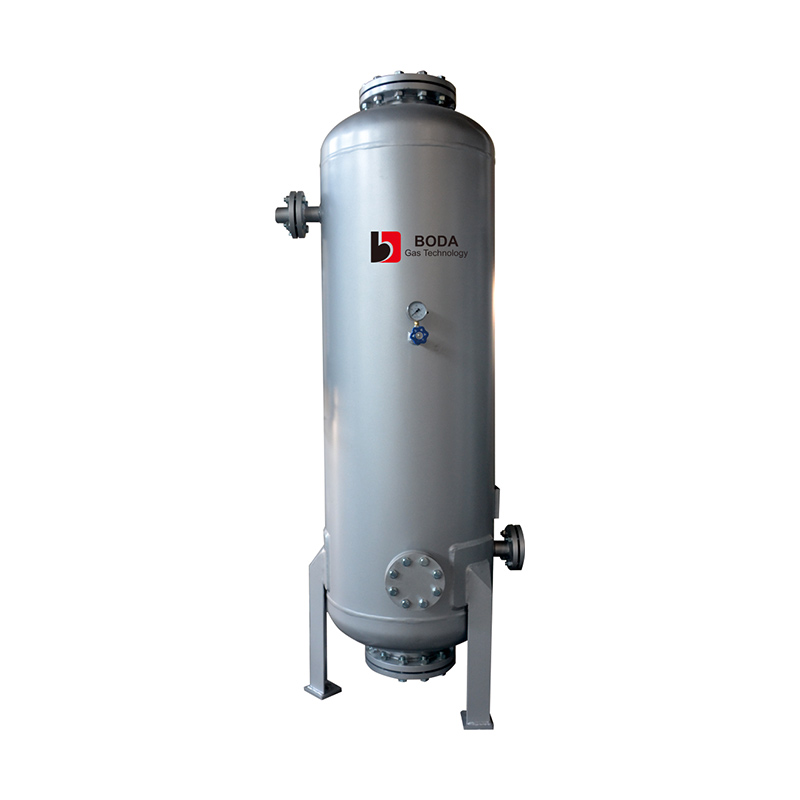
Flow rate: Measure both peak and average demand over a full week. An on-site nitrogen generator must cover peak events without undersizing. A buffer tank lets you use a smaller generator by smoothing demand spikes.
Delivery pressure PSA systems typically deliver 5-10 bar. Check your downstream equipment’s minimum pressure. Your compressed air supply may need upgrading to match.
Installation footprint: PSA generators need floor space for adsorption vessels and a buffer tank. Membrane systems are more compact. Measure the available area and height before shortlisting.
Total cost of ownership: Purchase price is only 20-30% of lifetime cost. Energy use (compressed air consumption) accounts for 60-70%. A more efficient generator costs more upfront but typically pays back within 2-3 years.
After-sales support: Check spare parts availability, service response time, and remote monitoring. Generator downtime stops production.
RFQ Checklist
When preparing your request for quotation, include: required purity and flow rate (peak and average), available inlet air pressure and quality, ambient temperature range, available footprint, and any industry-specific standards such as FDA for food or ASTM for electronics.
Why On-Site Industrial Nitrogen Generation Outperforms Traditional Supply Methods
On-site nitrogen generation eliminates the cost and complexity of delivered supply. Industry studies consistently report a 30–50% reduction in total nitrogen cost when switching from liquid or cylinder delivery to on-site PSA or membrane generation. For a mid-to-large consumer using 100–500 Nm³/h, the ROI payback period typically falls between 12 and 24 months.
- Cost savings: No delivery charges, cylinder rental, or liquid nitrogen evaporation losses (up to 2% per day in dewars). You pay only for electricity and maintenance.
- Supply reliability: Production is independent of vendor schedules, truck availability, or weather disruptions. Your nitrogen runs as long as compressed air is available.
- Safety improvements: On-site generators operate at low pressure (6–10 bar) inside the plant. Eliminating high-pressure cylinder handling reduces manual lifting risks and storage area requirements.
- Purity consistency: PSA generators maintain a fixed purity setpoint without the purity drift that can occur with liquid nitrogen supply as the tank level changes.
In oil and gas, remote wellhead or pipeline sites benefit from self-sufficiency—no refill logistics. Food packaging lines gain uninterrupted flow at 99.9% purity, avoiding production stoppages. Pharmaceutical facilities rely on consistent 99.999% nitrogen for inerting and blanketing, maintaining GMP compliance without delivery variances.
Frequently Asked Questions and Conclusion
What purity can an industrial nitrogen generator achieve? Your purity target determines the technology. PSA generators deliver 95% to 99.999% (less than 10 ppm residual oxygen) and are standard for electronics and pharmaceuticals. Membrane systems typically achieve 95% to 99.9% (up to 1,000 ppm oxygen), sufficient for food packaging and fire prevention. Cryogenic distillation reaches 99.9999% (1 ppm) for critical inerting in chemical processes.
How much maintenance is required? PSA generators require valve servicing every 10,000–20,000 operating hours and carbon molecular sieve replacement every 5–10 years. Membrane units need filter changes annually and module replacement every 3–5 years. Annual maintenance costs typically run 2–5% of the initial capital investment.
What is the lifespan of a PSA generator? With proper upkeep, PSA systems operate reliably for 15–20 years. Membrane generators average 10–15 years. Actual longevity depends on air quality and load cycling.
How does ambient temperature affect performance? Membrane performance is temperature-sensitive; output can drop 3–5% per 10°C above 25°C. PSA units are more tolerant but should have intake air kept below 45°C to maintain efficiency. Installing a membrane nitrogen generator in a hot environment may require climate-controlled enclosures.
Can I retrofit an existing compressed air system? Yes, provided the air supply meets the generator’s flow, pressure, and quality requirements (typically ISO 8573-1:2010 Class 1.4.1). A pre-treatment package (filters, dryer) may be needed to protect the generator from oil, moisture, and particulates.
On-site nitrogen generation cuts operating costs by 30–50% versus delivered cylinders or liquid, while eliminating logistics and evaporation losses. The correct system—PSA, membrane, or cryogenic—hinges on your required purity, peak flow, ambient conditions, and existing air infrastructure. Matching the technology to your specific operational profile ensures maximum return.
Contact BODA Gas
- BODA GAS TECH
- HANGZHOU BODA PURITY EQUIPMENT CO., LTD.
- You can find us by follows:
- Lemon Du
- Tel./Whatsapp/Wechat: +86-15755150162
- Email: bodagas2002@gmail.com