Before maintenance, commissioning, or hydrocarbon service, pipelines must hold a safe, inert atmosphere. Residual oxygen, moisture, or flammable vapours create combustion risks, drive corrosion, or contaminate the product. These hazards must be displaced before workers enter or the line goes into service.
Nitrogen gas purging is a process where dry, inert nitrogen is introduced into a pipeline to displace oxygen, moisture, or flammable gases, creating a non-reactive environment. The nitrogen sweeps through the line, exits at a vent, and carries contaminants away while positive pressure blocks air re-entry. That inertness, dryness, and availability make nitrogen the standard choice for pipeline purging.
Why Nitrogen Gas Is the Industry Standard for Pipeline Purging
Unlike air or natural gas, nitrogen creates an atmosphere where combustion cannot occur. Its inert, dry, non-flammable nature displaces oxygen quickly, which is why API and NACE guidance reference it as a preferred purge medium for hydrocarbon service.
Pipeline-grade nitrogen is typically supplied at 99.5% to 99.9% purity. That dryness halts corrosion by removing moisture before the line is opened or commissioned.
Key properties that make nitrogen the standard choice:
- Inert and non-flammable, so it eliminates ignition risk
- Dry, preventing rust and internal corrosion
- Displaces oxygen effectively, stopping oxidation of product or equipment
- Readily available and cheaper than argon or CO₂ for bulk purging
Argon offers similar inertness but costs substantially more; carbon dioxide can introduce corrosive carbonic acid in wet lines. Nitrogen balances safety, performance, and economics, so most pipeline purging procedures are written around it.
Step-by-Step Nitrogen Gas Purging Procedure for Pipelines
Run this sequence after the line is isolated and depressurised:
- Confirm pressure let-down to atmospheric level and lock out any sources of feed.
- Connect the nitrogen supply via a flow meter and pressure regulator at a low point.
- Install an oxygen analyser at the high-point vent.
- Introduce nitrogen and let it sweep from the low point to the vent.
- Monitor the oxygen reading until it falls below target — often 5% by volume or lower, with 2% typical before hydrocarbon entry.
- Hold positive nitrogen pressure while blanketing.
Displacement Purge
Nitrogen pushes the existing gas out in a single pass. Most efficient in straight, simple lines.
Dilution Purge
Nitrogen mixes with the gas inside, lowering oxygen progressively. Suitable for complex geometry.
Cyclic Purge
Pressurise with nitrogen, vent, and repeat. Uses less gas but takes longer.
Critical Safety and Supply Considerations for Nitrogen Gas Pipeline Purging
The primary hazard is oxygen deficiency: nitrogen is odourless and displaces breathable air. Displaced oxygen can accumulate in low points and confined spaces, where readings may stay below the 19.5% O2 safe-entry minimum for hours. Fit continuous oxygen monitors with audible alarms, and route vents at least 3 metres from work areas, doors, and air intakes. Wear personal O2 monitors at entry, and keep forced ventilation or a standby attendant in place.
Supply choices split between two routes:
- Delivered liquid nitrogen — suited to short, high-flow purges; transport and vaporiser logistics add lead time.
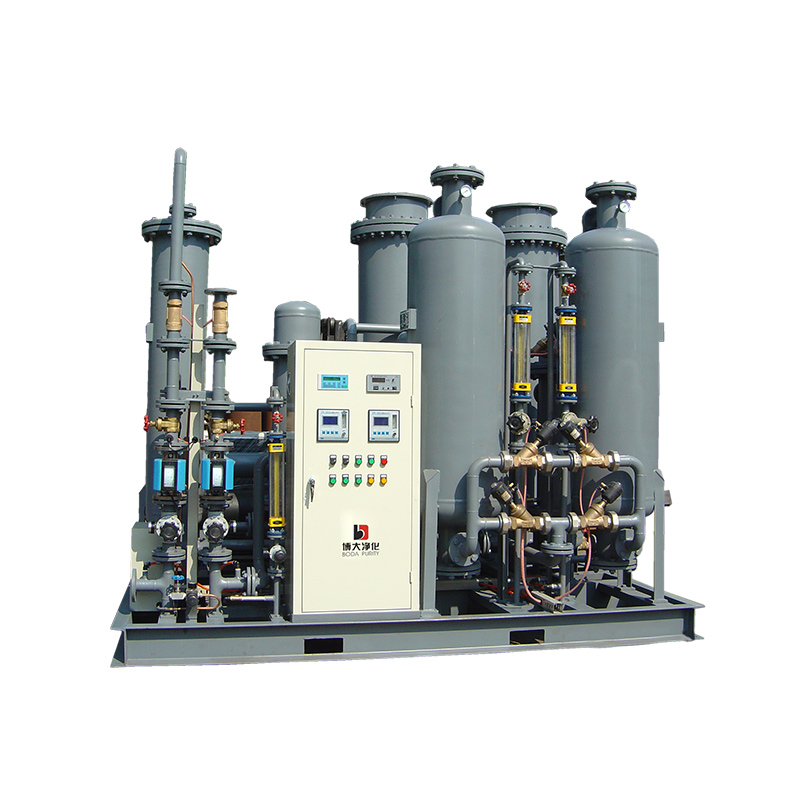
- On-site nitrogen generation — lower cost per SCFM for long-duration work, but power supply and generation capacity cap peak flow rate.
The right supply mode depends on project scale and site infrastructure.
Frequently Asked Questions About Nitrogen Gas for Pipeline Purging
How much nitrogen is required for a pipeline purge?
Plan on three to five times the pipeline volume for a displacement purge. Calculate volume as V = π × r² × L, with r and L in consistent units, then apply that safety factor.
What nitrogen purity is needed?
Use 99.5% to 99.9% nitrogen. Higher purity suits an O2 target of 2% or lower; lower purity works where a 5% ceiling is acceptable.
How long does a typical purge take?
Divide purge volume by nitrogen flow rate. A 150 mm line may finish in 30–60 minutes at 5–10 m³/min.
Can natural gas or air be used instead of nitrogen?
No. Air reintroduces oxygen and moisture; natural gas risks an explosive atmosphere. Nitrogen’s inertness removes both hazards.
What is the difference between purging and blanketing?
Purging displaces oxygen and flammable gas before work begins. Blanketing keeps a low-pressure nitrogen cover over the line afterward.
Conclusion: Plan a Safe and Efficient Nitrogen Purging Operation
Nitrogen remains the preferred purge medium because its inert, dry character displaces oxygen without adding moisture or combustion risk. A controlled stepwise procedure — with continuous oxygen monitoring at the vent point — keeps the operation predictable, measurable, and defensible. Oxygen deficiency is a real hazard, so treat every vent location and confined space as potentially lethal. Finally, match supply to scale: delivered liquid nitrogen suits short, high-flow jobs, while on-site generation pays off for longer campaigns. Consult qualified gas supply engineers and follow the applicable industry standards before you begin.
Contact BODA Gas
- BODA GAS TECH
- HANGZHOU BODA PURITY EQUIPMENT CO., LTD.
- You can find us by following:
- Lemon Du
- Tel./Whatsapp/Wechat: +86-15755150162
- Email: bodagas2002@gmail.com