Every cylinder swap or bulk-liquid delivery adds handling time, safety paperwork, and price volatility to your gas supply. A missed arrival can idle a production line for hours. A nitrogen generation system ends that dependency by producing gas on site from compressed air, at the purity your process actually needs.
A nitrogen generation system is an on-site unit that separates nitrogen from compressed air using pressure swing adsorption (PSA) or membrane technology. It produces nitrogen gas continuously at a set purity, typically 95–99.999%, so plants avoid cylinder deliveries, bulk-liquid storage, and evaporator losses.
The next section explains the working principle, key components, and how to match a system to your application.
How does a nitrogen generator work?
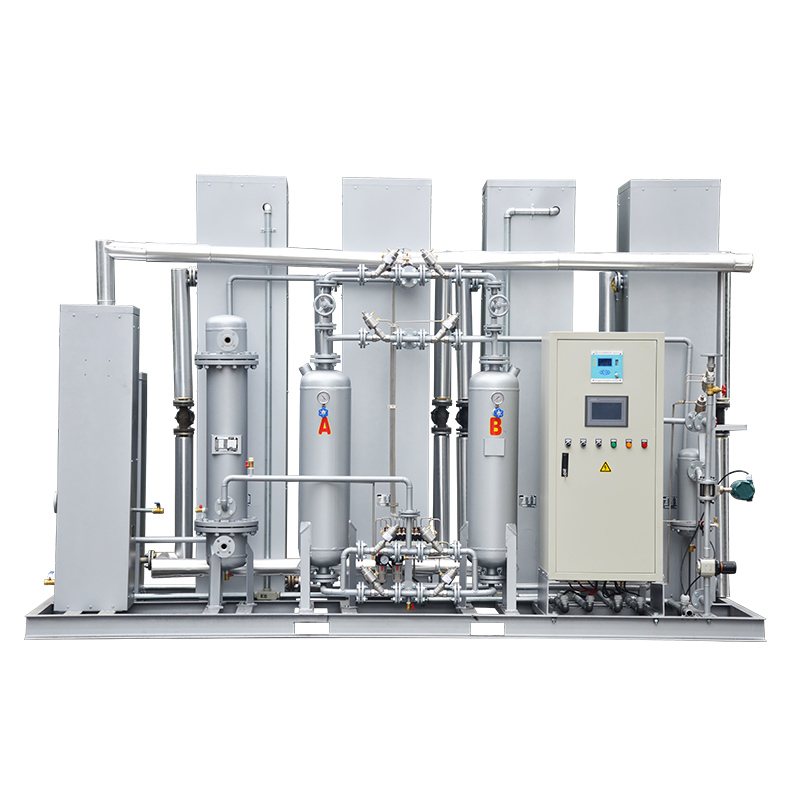
A nitrogen generator separates nitrogen from compressed air by pressure swing adsorption (PSA) or membrane permeation. In a PSA system, the cycle runs in four steps:
- Compressed air is filtered to remove oil, water, and particulates.
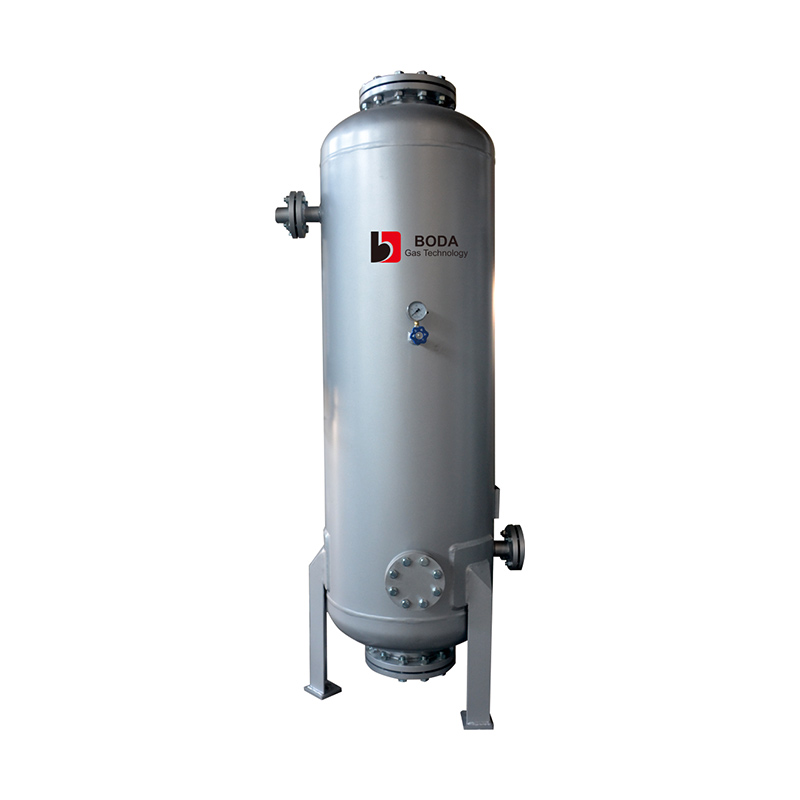
- Air enters a vessel packed with carbon molecular sieve (CMS).
- Oxygen and impurities adsorb onto the CMS; nitrogen passes through.
- The vessel depressurises to purge the captured gas, then returns to service while a second vessel repeats the cycle.
The result is continuous, on-spec nitrogen at your required purity.
Component roles
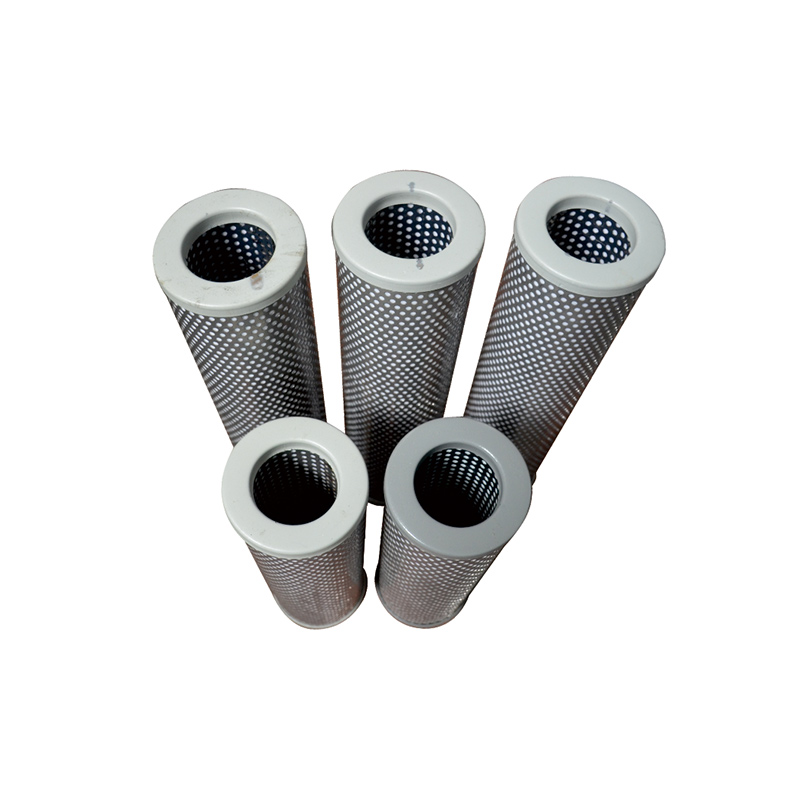
The compressor, filtration skid, CMS vessels, and purity monitor drive application fit, safety, and repeatability. Filtration protects the sieve; the monitor confirms each batch matches your specification.
Buyer warning: inlet air quality and pressure dew point dictate final purity — confirm both before sizing a system.
With that principle understood, compare components and product types before you approach a nitrogen generator manufacturer.
Nitrogen Generation System Components and Product Types
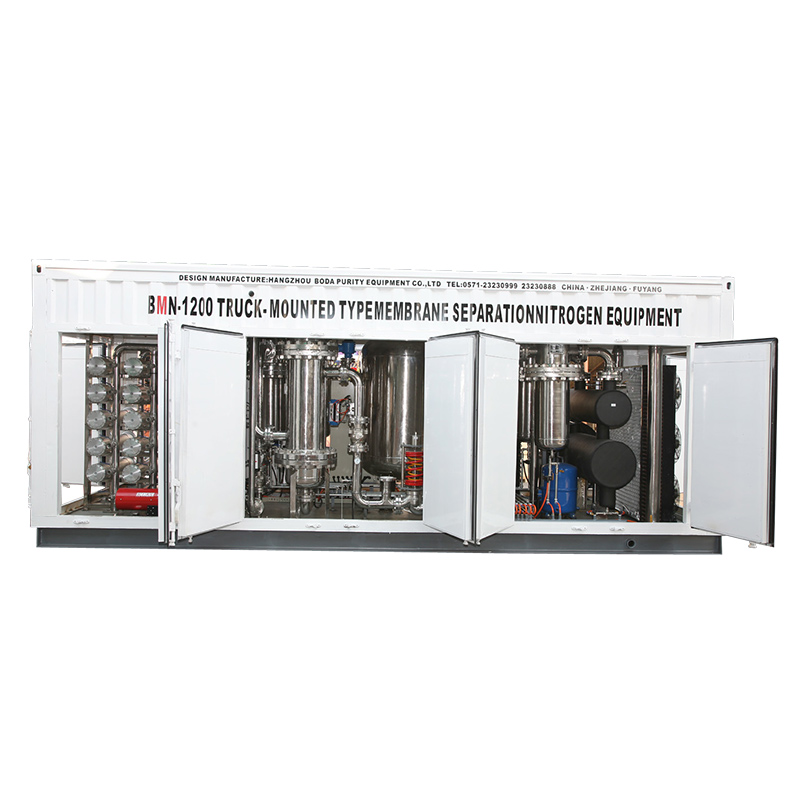
Three product types dominate the nitrogen generation system market. PSA generators use carbon molecular sieves for 95-99.999% purity. Membrane generators rely on hollow fibres and suit compact or mobile sites. Cryogenic plants distil air for 99.999%+ purity at very high volumes.
| Product type | Working principle | Typical purity | Best fit |
|---|---|---|---|
| PSA | Carbon molecular sieves | 95-99.999% | Mid-range flows, food and pharma |
| Membrane | Hollow fibre separation | Up to 99.5% | Compact, mobile or marine sites |
| Cryogenic | Air distillation | 99.999%+ | High-volume bulk supply |
Buyers comparing an on-site nitrogen generator should check:
- Purity and flow rate at stated inlet conditions
- Outlet pressure and dew point
- Footprint, noise, and power draw
- Maintenance intervals and spare part availability
These checks separate a workable system from one that fails your process spec. The right product type, matched to your purity profile, makes application selection simpler — covered next.
Industrial applications of nitrogen generators
- Food and beverage packaging – Modified atmosphere packaging (MAP) needs 99.5% purity to displace oxygen and extend shelf life. Size for peak batch draw, not average line speed, and request a purity certificate per delivery.
- Electronics manufacturing – Reflow soldering requires 99.999% (5N) nitrogen with a stable dew point below -60°C. Verify flow consistency at the point of use, not just at the generator outlet.
- Oil and gas – Pipeline purging and tank blanketing tolerate 95–98% purity but need high flow and continuous pressure. Confirm your compressor duty matches the required bar rating.
- Pharmaceutical and laboratory work – Documented purity, particulate counts, and validation records must match GMP or lab audit standards before you approve a supplier.
| Application factor | Buyer action |
|---|---|
| Purity (ppm O₂) | Match to process spec |
| Peak flow | Size for batch demand |
| Pressure | Verify compressor duty |
Once purity, flow, and pressure are locked to your process, the decision shifts from selection to customisation — the subject of the next section.
Custom Nitrogen Generation System Manufacturing and OEM Cooperation
Custom builds begin with your process data, not a catalogue. Send drawings or a physical sample, noting flow, purity, and pressure targets, and the manufacturer returns a feasibility quote. Once the sample is confirmed, production runs through assembly, packaging, and batch inspection before shipment.
| Stage | Buyer input | Manufacturer output |
|---|---|---|
| Enquiry | Drawings, sample, gas specification | Feasibility check and priced quote |
| Sampling | Approved drawings, test conditions | Confirmed sample with test record |
| Production | Packaging, logo, colour requirements | Batch build to agreed tolerance |
| Inspection | Accepted quality criteria | Inspection report and release |
| Shipment | Delivery schedule and terms | Packed consignment, dispatch notice |
Inspection detail
Keep every batch traceable: record purity, flow, pressure, and leak-test results against the approved sample. For a membrane nitrogen generator, confirm purity at maximum flow because that fixes membrane sizing. Those documented checks become the evidence for the supplier-fit comparison that follows.
Top 10 Nitrogen Generation System Manufacturers and Supplier Fit
Shortlist by supplier type first, brand second. Four market groups dominate nitrogen generation system supply, and each suits a different buying profile.
| Supplier type | Pros | Cons | Best fit |
|---|---|---|---|
| PSA specialist | High purity (to 99.999%) and low running cost | Higher capital cost; needs compressed air purification equipment | Food, pharma, electronics |
| Membrane supplier | Compact, low maintenance, fast start-up | Purity rarely above 99.5% | Marine, blanketing, fire suppression |
| Cryogenic contractor | Very high flow and purity at scale | High capital cost; long lead times | Chemicals, metallurgy, LNG terminals |
| OEM/private-label maker | Customised sizing, controls, branding | Verify spares and service coverage | Distributors, EPC contractors |
Scoring checklist:
- Confirm purity at maximum flow, not just nominal rating.
- Check the compressed air dryer sizing for summer ambient conditions.
- Review regional lead times, spares stock, and service response.
- Request sample support and batch inspection records before RFQ.
Sourcing principle: the lowest-cost nitrogen generation system is the one whose operating cost, spares, and service access are verified before you sign.
Contact BODA Gas
- BODA GAS TECH
- HANGZHOU BODA PURITY EQUIPMENT CO., LTD.
- You can find us by following:
- Lemon Du
- Tel./Whatsapp/Wechat: +86-15755150162
- Email: bodagas2002@gmail.com