Budgeting for on-site nitrogen often stalls at one question: what will a PSA nitrogen generator cost? Prices vary wildly—from USD 7,000 for a small unit to over USD 100,000 for a high-purity industrial system. Without a clear breakdown, you risk either overpaying or underestimating the total investment.
The price of a PSA nitrogen generator is determined by capacity, purity, pressure, dew point, and supplier factors. Each variable shifts the final quote. A 95% purity unit for pipeline purging costs far less than a 99.9995% system for electronics manufacturing. Your choice of supplier also affects scope, warranty, and after-sales support.
The following sections explain how capacity and purity drive price, what components make up the total cost, and how to evaluate quotes beyond the initial figure.
How PSA Nitrogen Generator Price Varies by Capacity and Purity
The price of a PSA nitrogen generator scales directly with two variables: flow capacity (Nm³/h) and required purity level (95%–99.9995%). A small unit delivering 10 Nm³/h at 95% purity may cost $7,000–$15,000, while a 100 Nm³/h system at 99.9995% purity can exceed $30,000. The table below shows common combinations.
| Flow Rate (Nm³/h) | Purity (%) | Typical Price Range (USD) |
|---|---|---|
| 10 | 95 | $7,000–$15,000 |
| 100 | 95 | $10,000–$30,000 |
| 10 | 99.9995 | $30,000–$70,000 |
| 100 | 99.9995 | $60,000–$100,000 |
Higher purity drives cost because of three hardware factors:
- More carbon molecular sieve (CMS) per vessel to increase nitrogen selectivity.
- Larger adsorption vessels to accommodate the extra CMS volume and longer cycle times.
- Advanced control systems — typically PLCs with continuous purity analysers — to maintain tight oxygen bleed-off.
When evaluating a BXN PSA nitrogen generator, always confirm the purity specification at your design flow. A small change from 99% to 99.9995% can double the price. For a custom quote, ask your nitrogen generator manufacturer for a price matrix at your target purity and capacity/flow rate.
Breaking Down the Cost Components of a PSA Nitrogen Generator
The generator skid typically accounts for only 30–50% of the total system cost. A complete on-site nitrogen generator installation includes several interdependent components, each with a distinct cost share.
Generator Unit and Adsorption Vessels
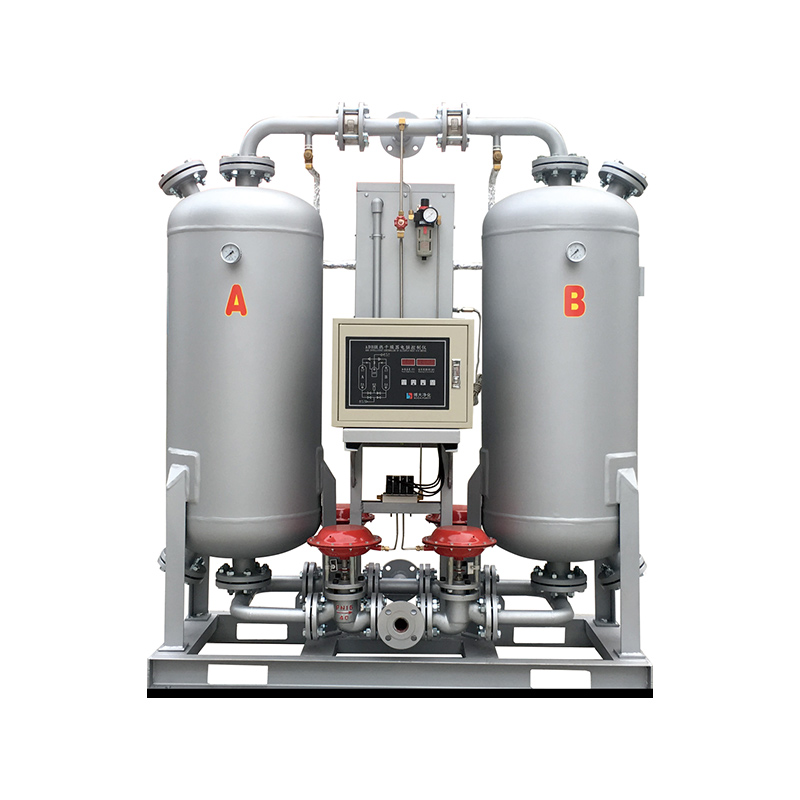
The PSA generator skid — containing the adsorption vessels, carbon molecular sieve (CMS), valves, and frame — represents roughly 25–35% of the total system price. Vessel size and material (carbon steel vs. stainless steel) drive this cost. Larger vessels for higher flow rates or 99.9995% purity require more CMS, adding 15–25% to the skid cost alone.
Air Compressor
The air compressor is the single most expensive auxiliary component, typically 30–40% of the total system investment. For a 100 Nm³/h generator, expect a 30–45 kW oil-injected screw compressor. The compressor must deliver clean compressed air at the correct pressure (7–10 bar) and volume to match the PSA unit‘s feed requirement.
Dryer and Filtration System
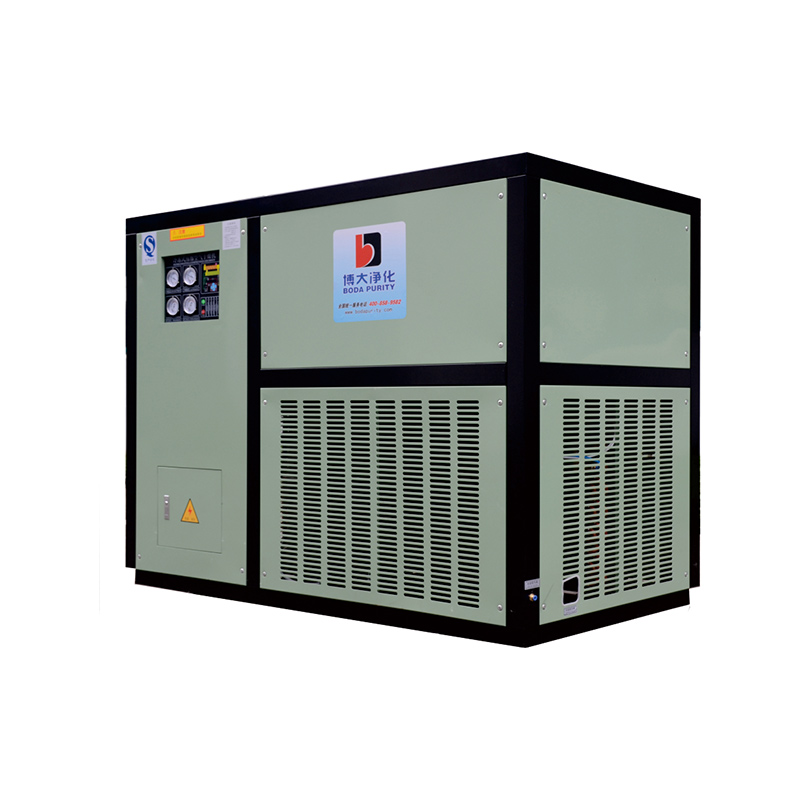
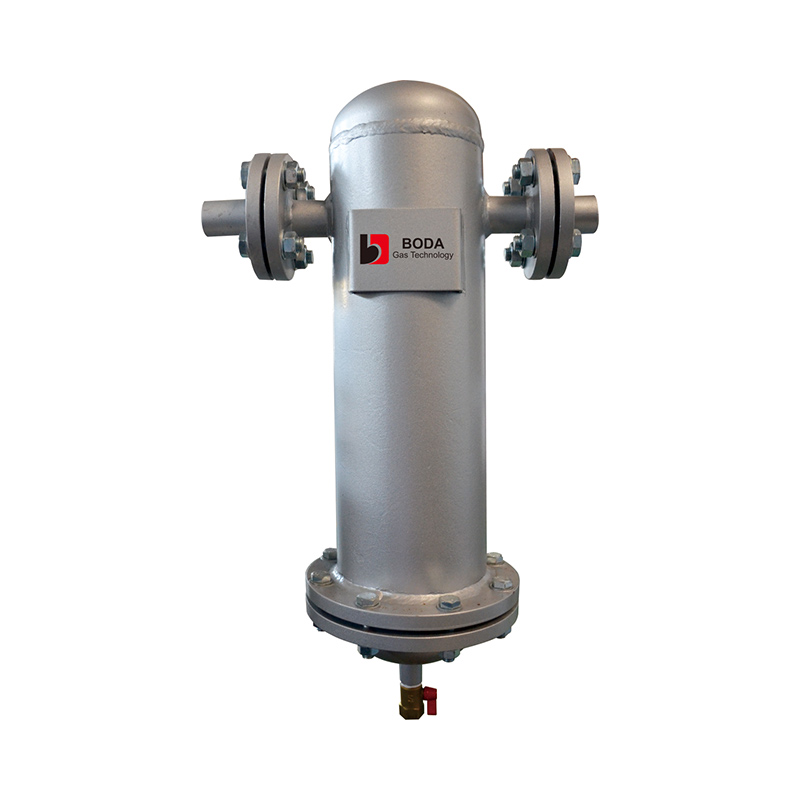
A refrigerated air dryer, coalescing filters, and particulate filters add 8–12% to the system cost. These components remove moisture, oil aerosols, and solid particles before air enters the adsorption vessels. Without proper drying and filtration, CMS life drops from 8–10 years to under 3 years.
Control System
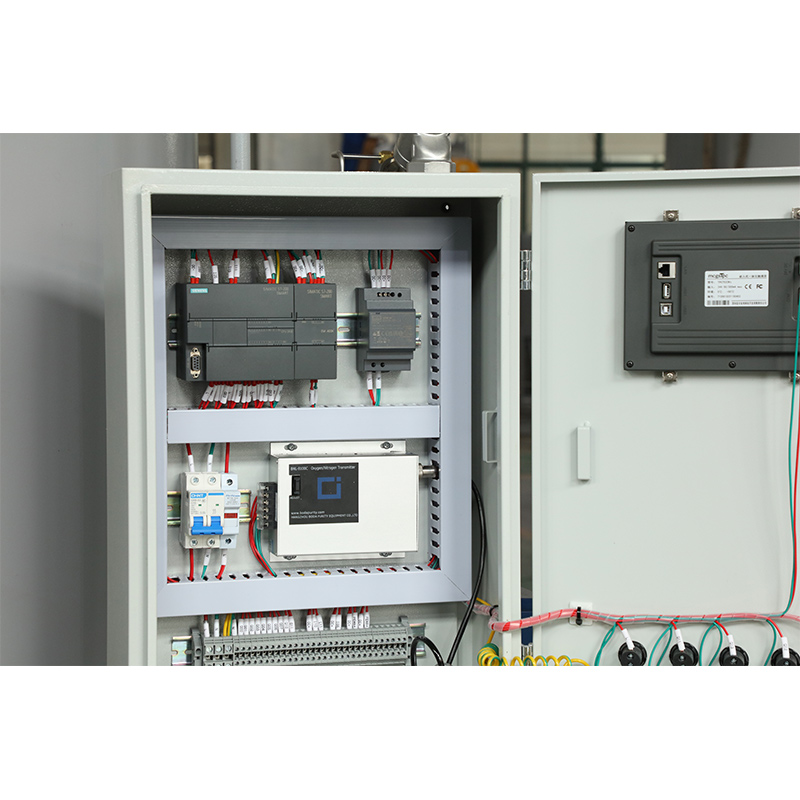
The PLC-based control panel, including touchscreen interface and remote monitoring capability, represents 5–8% of total cost. Advanced controls with purity monitoring, data logging, and auto-drain management increase this share but reduce operator oversight needs.
Installation and Commissioning
Installation, piping, electrical connections, and commissioning add 10–15% to the budget. This includes site preparation, compressed air piping from compressor to generator, nitrogen outlet piping, ventilation ducting, and startup testing. Many buyers overlook this cost until the quotation arrives.
A complete PSA nitrogen generator system costs 40–60% more than the generator skid alone. Always request a line-item quotation covering compressor, dryer, filters, installation, and commissioning.
Comparing Supplier Quotes: What to Look for Beyond the Price Tag
A low price quote can cost you double if the scope is incomplete. The generator skid price is only part of the system cost. When comparing supplier quotes, verify these elements:
- Scope of supply: Does the quote include the air compressor, dryer, pre-filters, and activated carbon filter? Many quotes list only the nitrogen generator. A complete package should itemise each component.
- Warranty length and terms: Standard warranties range from 12 to 18 months. Check what is covered — vessels, valves, CMS (carbon molecular sieve), and controls. Extended warranties may be negotiable.
- After-sales support: Response time, local service availability, and remote monitoring capability matter more than the initial price. Ask about spare parts stock and lead times.
- Shipping and duties: Import duties, freight, and insurance can add 10–25% to the quoted price. Request a delivered duty paid (DDP) price to compare apples with apples.
- Spare parts pricing: Request a price list for CMS, filters, seals, and valves. Some suppliers subsidise the generator and profit from consumables.
Request a detailed quotation with line items for each major component. Ask for three customer references — ideally from similar industries or capacity ranges. Just as you would vet an oxygen generator manufacturer for reliability, apply the same scrutiny to your nitrogen supplier.
This upfront diligence helps you avoid hidden costs that inflate total cost of ownership — the topic we cover next.
Total Cost of Ownership: Beyond the Initial Purchase Price
The purchase price accounts for only 30–40% of total lifetime cost. Energy consumption is the dominant recurring expense. A typical PSA unit consumes 0.30–0.50 kWh per Nm3 of nitrogen produced, depending on purity and system design. For a 100 Nm3/h generator operating 8,000 hours per year at 0.35 kWh/Nm3 and £0.12/kWh, the annual electricity cost reaches £33,600.
Carbon molecular sieve (CMS) replacement every 8–10 years adds £8,000–£20,000 per vessel. Routine maintenance—filter changes, valve servicing, and compressor oil—typically runs 2–4% of the initial purchase price annually.
Now compare against delivered liquid nitrogen. At 99.5% purity, 100 Nm3/h of gaseous nitrogen replaces roughly 50 kg/h of liquid nitrogen. At £0.15/kg, the liquid supply costs £60,000 per year. The PSA generator’s total annual operating cost (energy plus maintenance) is approximately £36,000. That yields an annual saving of £24,000. Against an installed cost of £80,000, payback arrives in 3.3 years.
To calculate energy per unit nitrogen accurately, use the flow conversion method from minnuogas: convert your required Nm3/h to mass flow, then multiply by the system’s specific energy consumption. The same approach applies when evaluating a membrane nitrogen generator or a membrane oxygen generator for comparison.
FAQ and Conclusion
How much extra should I budget for installation and ancillary equipment?
Installation and ancillary equipment typically add 30–50% to the generator skid price. For a 100 Nm³/h unit, the PSA skid may cost £40,000–£60,000; with an air compressor, compressed air dryer, filters, and commissioning, the total installed cost often reaches £60,000–£90,000. Always request a quote that itemises these components rather than a single lump sum.
What is a realistic payback period when switching from liquid nitrogen to on‑site PSA generation?
Many installations achieve payback within 12–24 months. A facility consuming 50 Nm³/h at 99.5 % purity typically saves £30,000–£50,000 annually on liquid nitrogen supply, making the investment recover quickly. Your actual payback depends on usage patterns, local liquid nitrogen prices, and the efficiency of your entire compressed air purification equipment system.
The price of a PSA nitrogen generator is never a single figure. It is shaped by capacity, purity, automation level, and the full system scope—including the air compressor, dryer, and installation. By requesting detailed quotes that cover all cost components and comparing total cost of ownership, you can identify the best value for your application.
Next step: Prepare your exact capacity (Nm³/h), purity (%), and delivery pressure, then send a detailed RFQ to at least three suppliers. Ask for line‑item pricing on the skid, compressor, dryer, installation, and commissioning to ensure an apples‑to‑apples comparison.
Contact BODA Gas
- BODA GAS TECH
- HANGZHOU BODA PURITY EQUIPMENT CO., LTD.
- You can find us by follows:
- Lemon Du
- Tel./Whatsapp/Wechat: +86-15755150162
- Email: bodagas2002@gmail.com