Industrial operations increasingly depend on a continuous, on-site nitrogen supply. Delivery delays, rising cylinder costs, and transport logistics push plants towards self-generated gas that matches demand in real time. Generating nitrogen where it is used also removes bulk storage risks and gives operators direct control over purity and pressure.
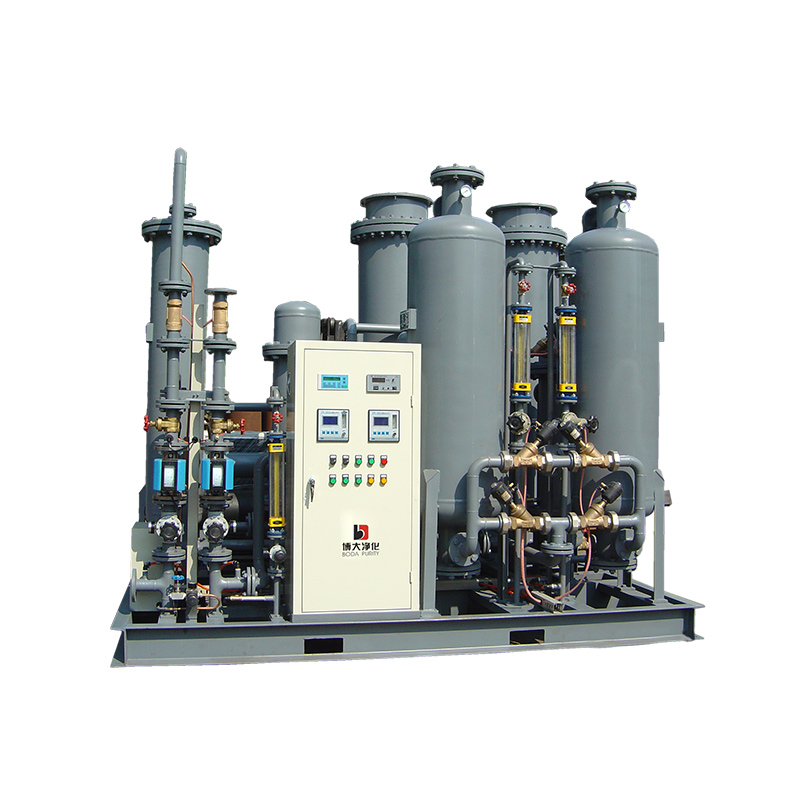
A skid-mounted nitrogen generation package is a factory-assembled, pre-piped and pre-wired system that combines air compression, purification, nitrogen generation, and storage on a single structural frame.
That pre-engineered arrangement cuts installation time and field piping dramatically. To see how, the next section breaks down each subsystem and the integration logic behind the skid.
Anatomy of a Skid-Mounted Nitrogen Generation Package
Every skid package groups six core subsystems onto one structural frame:
- Feed air compression: rotary screw or piston compressors sized to match feed flow and inlet pressure.
- Air treatment and drying: filters and dryers that remove oil, moisture, and particulates before separation.
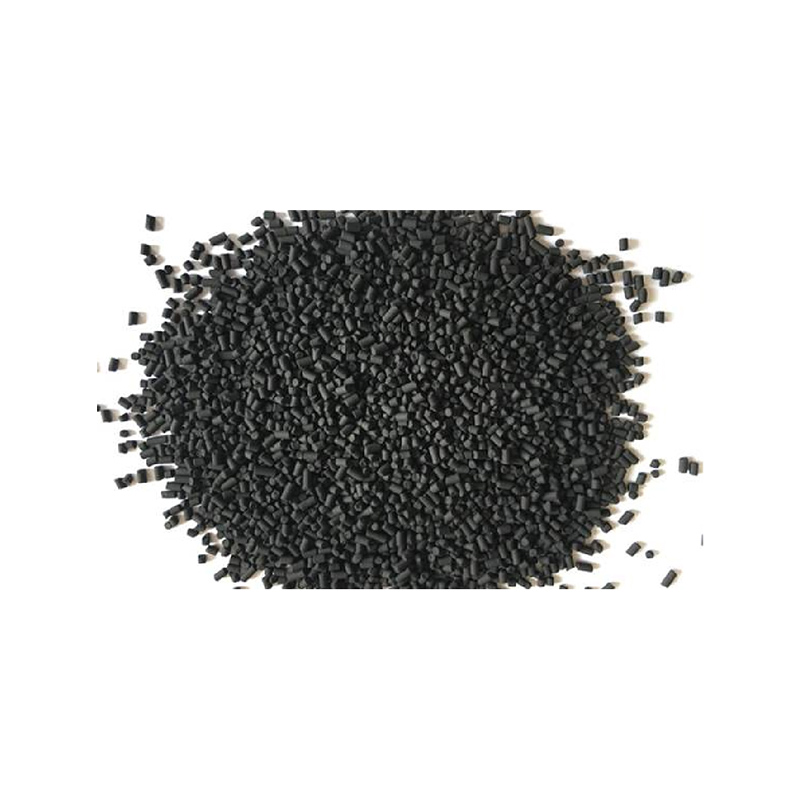
- Nitrogen generation core: pressure swing adsorption (PSA) or membrane technology. PSA delivers 95–99.999% purity; membranes suit lower-purity, high-flow duties.
- Buffer receiver: a storage vessel that absorbs demand peaks so the generator runs steadily.
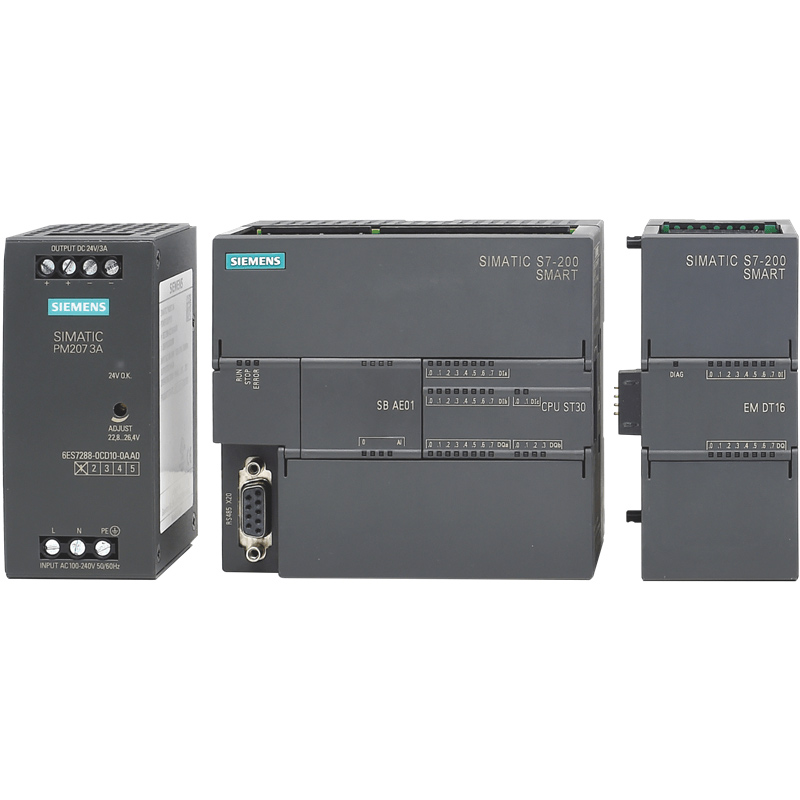
- Controls: PLC automation that monitors oxygen content, pressure, and flow, with alarms and shutdowns.
- Booster package: optional high-pressure unit for pipeline purging, well services, or cylinder filling.
Because the skid arrives pre-piped, pre-wired, and factory-tested, the buyer avoids most site assembly. Connect power and a feed air supply, then hook the nitrogen outlet to the process line. Typical packages span 10 to 5,000 Nm3/h at 95–99.999% purity, so the specification choice is about matching flow, purity, and pressure to the application.
Industrial Applications That Depend on Skid-Mounted Nitrogen Packages
Each industry draws a different duty from the package, so the skid’s value is in delivering the right gas quality to the right process:
- Oil and gas: tank blanketing, pipeline purging, and drying after hydrotesting.
- Chemical and petrochemical: inerting reactors and blanketing solvent storage.
- Food and beverage: modified atmosphere packaging to extend shelf life.
- Pharmaceutical: oxygen displacement in fermenters and vial purging.
- Electronics: reflow soldering atmospheres and component dry storage.
- Marine: inert gas for cargo tank blanketing on tankers.
- Metallurgy: annealing furnace atmospheres and laser cutting assist gas.
- Water treatment: nitrogen stripping for dissolved oxygen control.
Purity and flow vary sharply across these duties — 95% nitrogen may suffice for blanketing, while electronics and pharma often require 99.99% or higher. For well services and pipeline commissioning, portable or containerized packages bring the same capability directly to the site, removing the need to deliver liquid nitrogen.
How to Evaluate a Skid-Mounted Nitrogen Generation Package for Your Project
Once you know the duty, the first technical choice is PSA vs. membrane. Pressure swing adsorption delivers 99.9%+ purity at lower flows; membrane systems suit higher flows where 95-99.5% is acceptable. Everything else follows from that decision.
Evaluate in sequence:
- Demand — continuous purity, flow, and operating pressure, including future peaks.
- Site — ambient temperature range, inlet air quality, and available utilities.
- Layout — footprint constraints and clearances for maintenance access.
- Reliability — redundancy for critical duties, buffer storage sizing, turndown capacity.
- Cost — total lifecycle cost: energy, filter elements, adsorbent or membrane life, and downtime.
Only then confirm the skid configuration against the verified duty. Common specification pitfalls: undersizing buffer storage for intermittent surges, neglecting inlet air quality (oil, water, and particulates shorten media life), and ignoring turndown capacity when demand fluctuates.
Frequently Asked Questions About Skid-Mounted Nitrogen Generation Packages
- How does a skid package differ from unpackaged nitrogen generators?
Unpackaged units arrive as loose parts you pipe, wire, and test on site. A skid package arrives factory-assembled, pre-piped, and pre-wired, cutting commissioning from weeks to days. - What purity levels can a skid system achieve?
PSA skids reach 95–99.999% purity; membrane units deliver 95–99.5%. Confirm purity at worst-case flow. - Can a skid be portable or containerised?
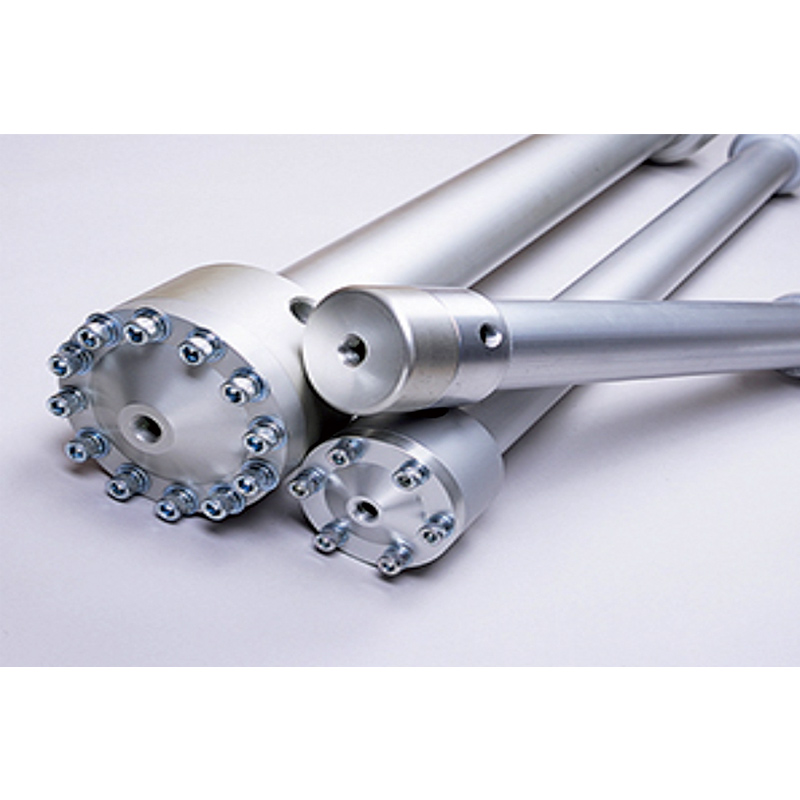
Yes. Units fit in ISO containers or road-transportable frames. Containerised builds also shelter the membrane nitrogen generator from weather. - What maintenance do PSA and membrane skids require?
PSA skids need annual sieve and valve checks; membrane skids need periodic bundle changes. Both need filter and dryer servicing. - How long does installation take?
Most skids produce nitrogen within one to three days of utility connection. For sizing, apply flow-to-mass conversion: Nm³/h × nitrogen density (≈1.25 kg/Nm³) gives kg/h.
Conclusion
A pre-engineered skid-mounted nitrogen generation package delivers a single, factory-tested supply chain: fewer interfaces, faster commissioning, and nitrogen available the moment utilities connect. Match purity, flow, and pressure to the actual process demand — not a nominal rating — and judge the purchase on lifecycle cost, including energy, maintenance, and downtime, rather than upfront price.
Contact BODA Gas
- BODA GAS TECH
- HANGZHOU BODA PURITY EQUIPMENT CO., LTD.
- You can find us by following:
- Lemon Du
- Tel./Whatsapp/Wechat: +86-15755150162
- Email: bodagas2002@gmail.com