Which Nitrogen Generator Manufacturers Are Global Leaders?
Many industrial buyers still rely on delivered nitrogen despite rising costs and supply chain risks. Cylinder rental and transport surcharges can account for up to 40% of total nitrogen cost for remote facilities. A single supply disruption can halt an entire processing line.
Nitrogen generator manufacturers design and build on-site gas separation equipment that produces high-purity nitrogen from compressed air, eliminating cylinder handling and long-term contracts. This equipment typically uses pressure swing adsorption (PSA) or membrane technology to generate nitrogen at the point of use, reducing dependence on third-party suppliers.
To select the right partner, buyers must understand the global landscape of manufacturers and evaluation criteria. The following sections examine leading suppliers and the factors that drive a cost-effective sourcing decision.
Global Leaders in Nitrogen Generator Manufacturing
The supply landscape for on-site nitrogen generation includes several established manufacturers with distinct technology specialisations. Selection depends on matching each supplier’s core competency to your purity, capacity, and industry requirements.
- Atlas Copco produces both PSA and membrane systems. Their PSA range delivers purity up to 99.999% at flows from 0.5 to 3000 Nm³/h. Membrane variants suit lower-purity applications (95–99.5%) for food packaging and fire prevention. The company serves the oil and gas, chemical, and electronics sectors across Europe, North America, and Asia.
- Ingersoll Rand focuses on PSA technology with purity levels between 95% and 99.999%. Their modular nitrogen generators handle flow rates from 2 to 2500 Nm³/h. Key industries include pharmaceutical, food and beverage, and metal processing. The company operates manufacturing hubs in the United States, Germany, and China.
- Generon specialises in membrane nitrogen generation, achieving purities of 95–99.9%. Their systems are compact and ideal for offshore platforms, marine vessels, and pipeline blanketing in oil and gas. Capacities range from 1 to 5000 Nm³/h. Generon maintains service centres in the Americas, Europe, and the Middle East.
- PEAK Scientific targets laboratory and analytical applications with PSA technology. Their generators deliver 99.999% purity at low flow rates (0.5–50 L/min). The company serves pharmaceutical R&D, clinical diagnostics, and academic research institutions primarily in Europe and North America.
- OXYMAT produces high-pressure PSA nitrogen generators for demanding industrial environments. They achieve purity up to 99.9995% at capacities from 1 to 3000 Nm³/h. Typical applications include heat treatment, laser cutting, and chemical inerting. The manufacturer is based in Denmark and supplies customers worldwide.
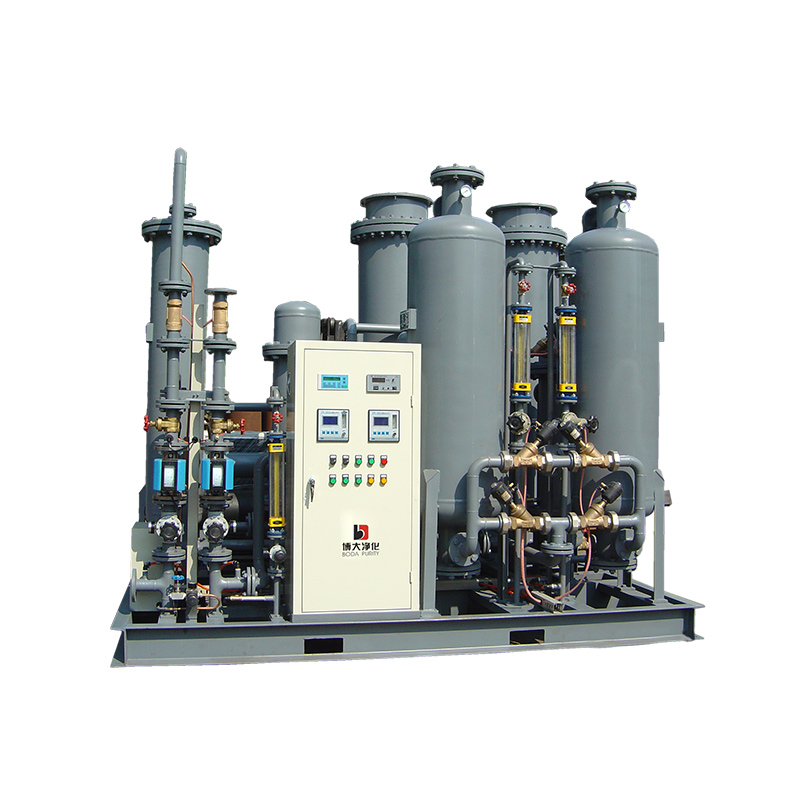
- BODA Gas offers a complete range of PSA nitrogen generators covering 99–99.999% purity at flow rates from 0.5 to 3000 Nm³/h. Their equipment serves oil and gas, food packaging, electronics, and metallurgy. The company exports from its Asian manufacturing base to over 60 countries and provides custom skid-mounted and containerised configurations.
This overview covers the major global players. The next section examines how to match manufacturer capabilities to your specific technology requirements.
Assessing Manufacturer Capabilities by Technology Type
Selecting between PSA and membrane nitrogen generators starts with your purity and flow demands. Each technology suits different applications, and manufacturers have specialised accordingly.
PSA technology delivers nitrogen purity up to 99.999% and supports high flow rates. Manufacturers such as OXYMAT and BODA have built reputations around large-scale PSA systems for electronics, pharmaceuticals, and laser cutting. Energy consumption is higher due to the regeneration cycle, and the footprint is larger because of dual adsorption vessels. Maintenance involves periodic valve servicing and adsorbent replacement every 3–5 years.
Membrane technology offers purity in the 95–99.5% range with a compact, modular design. Generon and Parker supply membrane systems commonly used for food packaging, inerting, and fire suppression. Energy consumption is lower, the footprint is smaller, and there are fewer moving parts. However, membrane elements require replacement every 5–8 years, depending on feed air quality.
To match technology to your application, consider these criteria:
- Energy consumption – PSA uses 20–30% more compressed air per unit of nitrogen produced.
- Footprint – Membrane skids occupy roughly half the space of an equivalent PSA unit.
- Maintenance – PSA has more mechanical components; the membrane has simpler upkeep but higher consumable costs.
Choose PSA when you need 99.9%+ purity and high continuous flow. Choose a membrane for medium-purity, space-constrained sites, or where capital cost must be minimised. The next section covers how to evaluate manufacturers on service, compliance, and lead times.
Key Evaluation Criteria for Sourcing from Nitrogen Generator Manufacturers
Once you match the technology type to your purity and flow needs, the real work begins: evaluating suppliers on commercial and operational criteria that determine long-term reliability. Below are the core factors to include in your assessment.
- Customisation and configuration options — Skid-mounted units suit compact indoor spaces, while containerised systems protect equipment in outdoor or marine environments. Some manufacturers offer modular designs that simplify capacity scaling: you start with one module and add another as demand grows, avoiding a full replacement.
- Compliance with international standards — Pressure vessel certification is non-negotiable. Look for ASME Section VIII Division 1 (common in the Americas) or CE marking under the Pressure Equipment Directive 2014/68/EU (mandatory for Europe). Without these, your site may face insurance or regulatory hurdles.
- After-sales support and spare parts availability — Remote monitoring platforms can alert your team to filter saturation or purity drops exceeding 20% from the setpoint, reducing unplanned downtime. Ask whether critical spares (valves, membranes, carbon beds) are stocked locally or require overseas shipment with weeks of waiting.
- Lead times and delivery reliability — Standard nitrogen generator configurations typically ship in 8 to 16 weeks from order. Custom designs (special valving, non‑standard enclosures, high‑flow models) may stretch to 20 weeks or more. Request a documented lead‑time breakdown and check if the manufacturer has a penalty clause for delays.
- Export readiness and documentation — Manufacturers experienced in cross‑border projects provide a CE Declaration of Conformity, ASME data reports, customs‑compliant packing lists, and country‑specific electrical certifications. They should also confirm that the system’s electrical panel meets local voltage and frequency requirements (e.g., 50 Hz vs. 60 Hz).
These criteria help you filter suppliers before investing time in detailed quotes. The next section outlines the specific questions to include in your RFQ to ensure no critical detail is missed.
What to Ask Before Selecting a Nitrogen Generator Manufacturer
Ask these questions before you issue an RFQ. Each one separates suppliers that offer real support from those that just sell equipment.
- What is the nitrogen or oxygen capacity you need in Nm³/h?
- What is the nitrogen or oxygen purity you need in %?
- What is the nitrogen or oxygen pressure you need in Nm³/h?
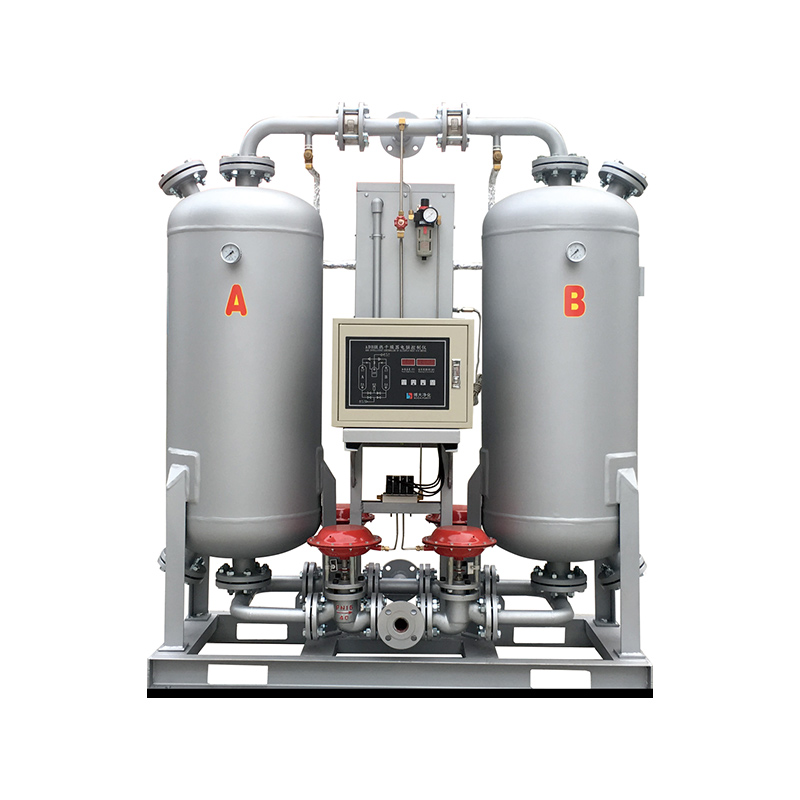
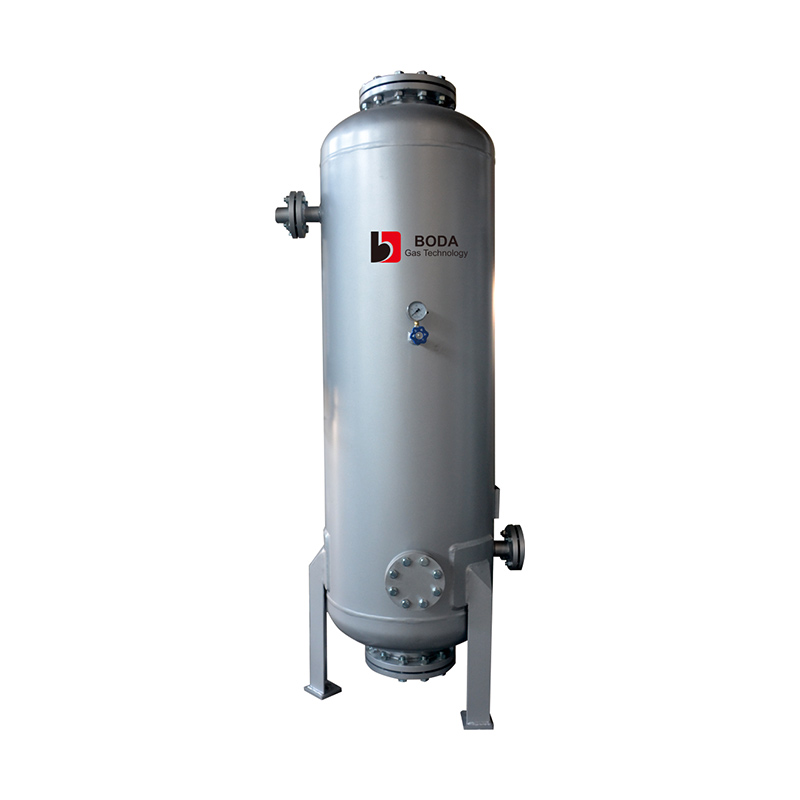
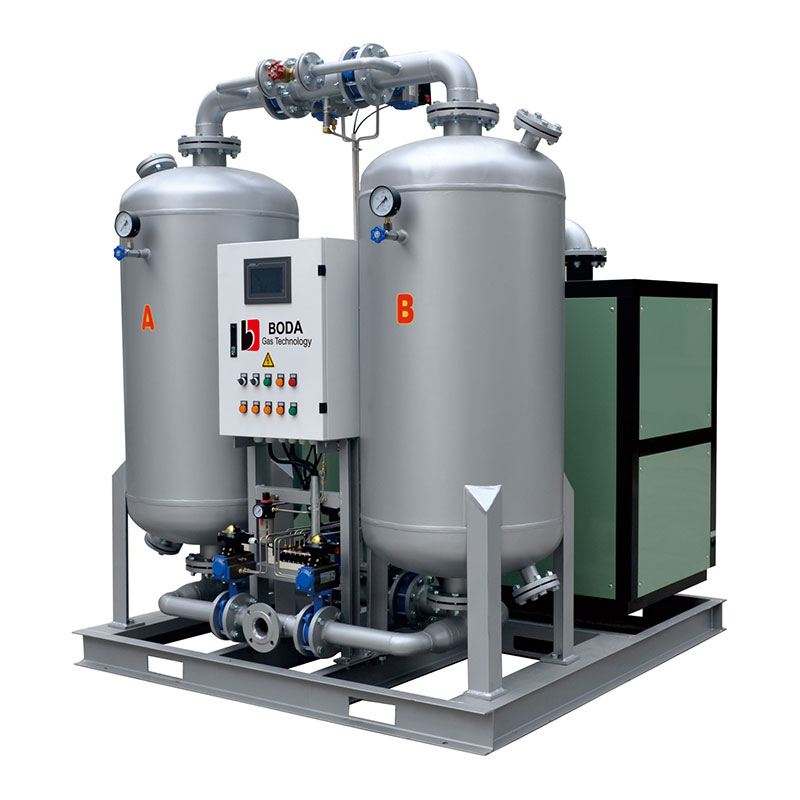
- Whole PSA nitrogen generator system including: Air compressor-tanks-dryers-multiple filters-PSA nitrogen generator-buffer tank
Will our scope of supply include all the above-mentioned components?
A checklist like this keeps your RFQ focused and prevents surprises after delivery.