For industrial buyers, comparing PSA nitrogen generator prices by quotation alone can be misleading. Two systems with the same advertised nitrogen capacity can cost very different amounts because of nitrogen purity, outlet pressure, compressed-air quality, operating hours, automation, storage capacity, and auxiliary equipment. A low purchase price can become expensive if the compressor is oversized, the molecular sieve has a short service life, or the system cannot maintain purity at peak demand. The real challenge is not finding the cheapest nitrogen generator. It is identifying the configuration that produces the required nitrogen gas reliably at the lowest total cost over its operating life.
Evaluate the best PSA nitrogen generator price against required purity, flow, pressure, operating hours, energy consumption, equipment scope, and service life. BODA GAS recommends comparing total cost of ownership rather than purchase price alone, then selecting a nitrogen-making machine matched to the actual process demand.
Price becomes much easier to evaluate once the equipment configuration is understood. The following sections break down the technical factors behind PSA nitrogen generator cost, compare typical configurations, and explain which specifications deserve the greatest attention before requesting a factory quotation.
Why Does Nitrogen Purity Have Such a Strong Effect on PSA Nitrogen Generator Cost?
Nitrogen purity is one of the first parameters that should be fixed before discussing price. A PSA system separates oxygen and other components from compressed air through adsorption. As the required residual oxygen concentration decreases, the separation duty generally becomes more demanding.
For example, an application requiring approximately 95% nitrogen purity has very different design requirements from one requiring 99.999% purity. Higher purity may require greater compressed-air consumption, additional purification stages, larger adsorption capacity, tighter control, and more sophisticated gas analysis.
Therefore, buyers should never compare quotations using only the phrase “nitrogen generator.” The technical specification should clearly state:
- Nitrogen purity: for example 95%, 99.5%, 99.9%, 99.99%, or 99.999%.
- Rated nitrogen flow: expressed in Nm³/h or another clearly defined reference condition.
- Nitrogen outlet pressure: including normal and maximum operating pressure.
- Required dew point: where the process has moisture-sensitive requirements.
- Continuous or intermittent operation: because operating patterns affect sizing.
A competent nitrogen plant manufacturer should calculate the PSA system around these requirements rather than simply selecting a standard model from a catalog. This prevents buyers from paying for unnecessary purity or purchasing a machine that cannot meet process requirements.
Why Does Nitrogen Flow Capacity Change the PSA Nitrogen Generator Price?
Flow capacity is another major cost driver. A nitrogen-making machine producing 20 Nm³/h cannot be priced on the same basis as a system producing 500 Nm³/h. Higher output normally requires greater adsorption volume, larger valves, larger pipelines, greater compressed-air capacity, larger receivers, and a stronger structural arrangement.
However, maximum capacity should not automatically be used as the design point. Industrial buyers should identify the actual demand profile. A process may require 100 Nm³/h continuously but occasionally reach 160 Nm³/h. Another process may consume only 60 Nm³/h on average but require a short peak of 200 Nm³/h.
| Design Factor | Lower-Demand System | Higher-Demand System | Typical Cost Impact |
|---|---|---|---|
| Nitrogen flow | Low or medium | High or very high | Higher flow generally increases equipment size and investment |
| Purity | 95–99.5% | 99.9–99.999%+ | Higher purity can increase air consumption and purification requirements |
| Pressure | Moderate outlet pressure | High-pressure delivery | May require additional compression or boosting equipment |
The correct approach is to calculate average demand, peak demand, operating pressure, and future expansion requirements. A reliable supplier can then determine whether a single PSA train, multiple trains, or modular expansion is the most economical configuration.
Why Is the Air Compressor Part of the PSA Nitrogen Generator Price?
A PSA nitrogen generator does not create nitrogen from nothing. It separates nitrogen from atmospheric air, so the compressed-air system is a fundamental part of the complete installation. In many projects, the air compressor represents a significant proportion of both capital investment and long-term energy consumption.
This is why comparing only the price of the adsorption skid can produce an inaccurate purchasing decision. The complete system may include:
- Air compressor
- Air receiver
- Compressed-air dryer
- Coalescing and particulate filters
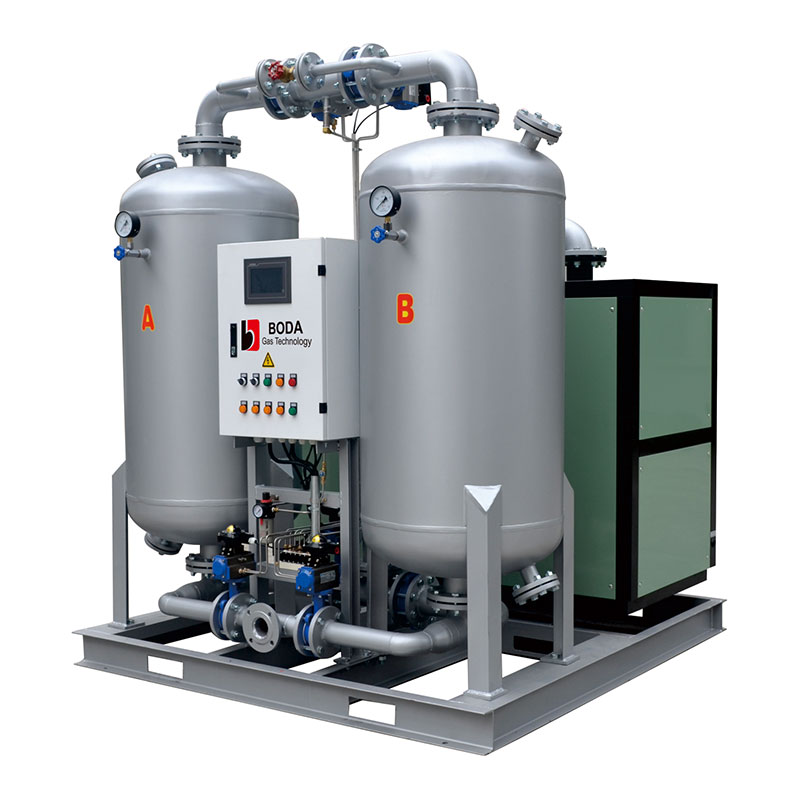
- PSA adsorption towers
- Nitrogen buffer tank
- Nitrogen purification equipment, when required
- Oxygen analyzer
- PLC control system
- Electrical control cabinet
Compressed-air quality is especially important. Water, oil aerosols, and particles can affect valves, molecular sieve performance, and long-term system stability. The required air treatment should therefore be specified according to the process and applicable compressed-air quality requirements, rather than omitted to make the initial quotation appear cheaper.
For a factory buyer, the meaningful figure is the price of the complete nitrogen generation package, together with its expected electricity consumption and maintenance requirements.
Why Does Operating Pressure Affect the PSA Nitrogen Generator Cost?
Nitrogen outlet pressure is frequently overlooked during early procurement. A generator designed to produce nitrogen at moderate pressure has different equipment requirements from a system that must deliver nitrogen at high pressure.
If the required pressure exceeds the practical outlet pressure of the PSA system, a nitrogen booster may be necessary. The booster adds equipment cost, electrical consumption, cooling requirements, instrumentation, and maintenance.
Buyers should therefore provide the nitrogen plant manufacturer with both the normal and maximum required pressure. For example:
- Required pressure at the generator outlet
- Pressure at the actual point of use
- Pressure loss through pipelines and valves
- Peak downstream pressure demand
- Required pressure stability
The difference matters because a quotation based only on “nitrogen pressure: 8 bar” may not tell the complete story. If the application needs stable pressure at a distant production line, the system may require a larger buffer receiver or a different control strategy.
Good engineering practice is to calculate pressure losses throughout the distribution system before selecting the nitrogen generator machine. This avoids purchasing a generator that meets the pressure specification on paper but fails to deliver the required pressure during real operation.
Why Should Buyers Compare Total Cost of Ownership Instead of Purchase Price?
The initial quotation is only one part of PSA nitrogen generator cost. A technically cheaper machine may consume more compressed air and electricity every hour. Over several years, this operating difference can exceed the original purchase-price difference.
Total cost of ownership should normally include:
- Initial equipment investment
- Electricity consumption
- Routine maintenance
- Filter replacement
- Valve and instrument maintenance
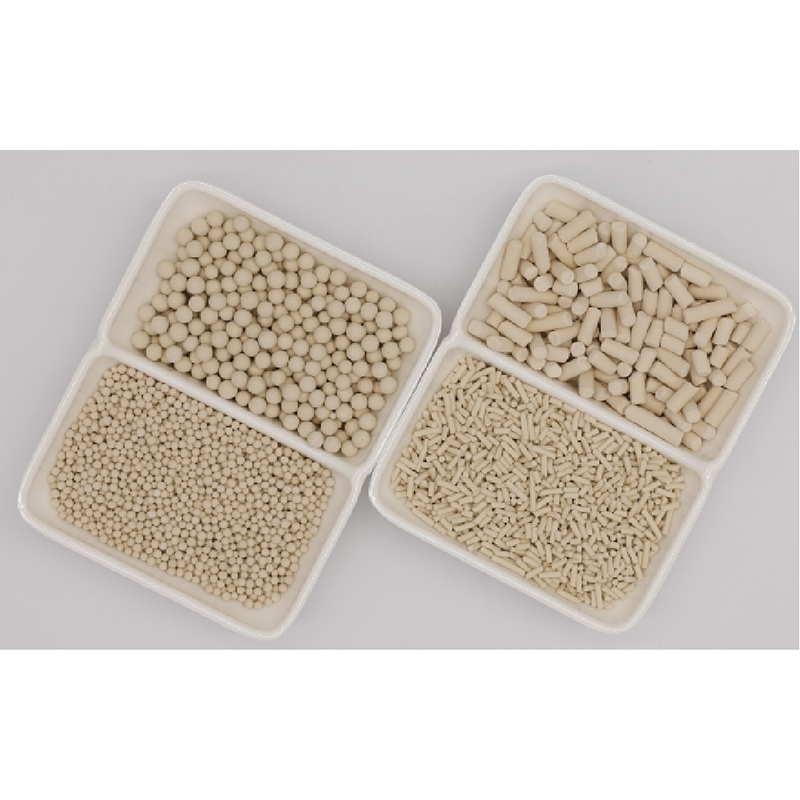
- Molecular sieve replacement when required
- Spare parts
- Labor and service costs
- Downtime risk
For example, a supplier may quote a lower equipment price but use a configuration with higher specific air consumption. Another supplier may provide a slightly higher initial price with improved controls and lower energy consumption. If the machine operates continuously for thousands of hours each year, the second configuration can produce a lower lifecycle cost.
| Cost Category | What Buyers Should Check | Why It Matters |
|---|---|---|
| CAPEX | Generator, compressor, dryer, tanks, controls | Determines initial investment |
| Energy | Compressor power and specific air consumption | Major recurring operating expense |
| Maintenance | Filters, valves, analyzers, molecular sieve | Affects annual operating cost |
| Downtime | Redundancy, spare parts, service response | Protects production continuity |
The correct question is therefore not “Which supplier offers the lowest price?” It is “Which configuration delivers the required nitrogen gas at the lowest reliable lifecycle cost?”
Why Do Auxiliary Components Change the Quoted Nitrogen Generator Price?
A PSA system quotation can look inexpensive when important accessories are excluded. Buyers should check the scope of supply line by line before comparing competing offers.
Common auxiliary components include air receivers, nitrogen buffer tanks, dryers, filters, oxygen analyzers, pressure transmitters, flow meters, control panels, PLC systems, piping, valves, and safety devices.
The buffer tank deserves particular attention. A process with relatively stable continuous nitrogen demand may need only limited storage. An intermittent process can create a sudden flow peak that requires additional nitrogen storage to prevent pressure fluctuations or unnecessary oversizing of the PSA system.
Automation also influences price. A basic control system may provide local operation, while a more advanced package can include automatic purity control, pressure monitoring, alarm management, remote communication, data logging, and automatic standby functions.
These features should not be viewed simply as optional extras. Their value depends on the application. A 24-hour unattended production facility may benefit significantly from advanced monitoring, while a small workshop may prefer a simpler and easier-to-maintain configuration.
Why Does the Choice of Nitrogen Plant Manufacturer Matter?
The supplier influences more than the initial quotation. A capable nitrogen plant manufacturer should be able to connect process requirements with equipment design, production quality, commissioning, and after-sales support.
Before placing an order, industrial buyers should evaluate:
- Engineering capability and experience with PSA technology
- Manufacturing capability and factory quality control
- Availability of performance guarantees
- Clarity of the technical data sheet
- Quality and availability of spare parts
- Commissioning and operator training
- Remote technical support
- Experience with international export requirements
BODA GAS approaches PSA equipment selection from the complete-system perspective. Since 2002, the company has supplied nitrogen generation and purification systems for applications including petroleum, chemicals, natural gas, electronics, energy, power, pharmaceuticals, food, new materials, oilfields, and drilling operations.
For overseas buyers, this engineering capability can reduce procurement risk. A reliable supplier should help verify the required flow, purity, pressure, compressed-air conditions, ambient conditions, control philosophy, and installation requirements before finalizing the quotation.
Why Is a Standardized Technical Specification Essential Before Requesting a Price?
The fastest way to receive comparable quotations is to issue a clear technical specification. Without one, different suppliers may quote completely different equipment while using similar product names.
A procurement specification for a PSA nitrogen generator should normally include:
- Nitrogen capacity: required Nm³/h
- Nitrogen purity: required oxygen concentration or nitrogen concentration
- Outlet pressure: normal and maximum
- Operating hours: hours per day and days per year
- Feed-air conditions: pressure, temperature, and quality
- Site conditions: altitude, ambient temperature, and installation environment
- Control requirements: local, automatic, remote, or integrated plant control
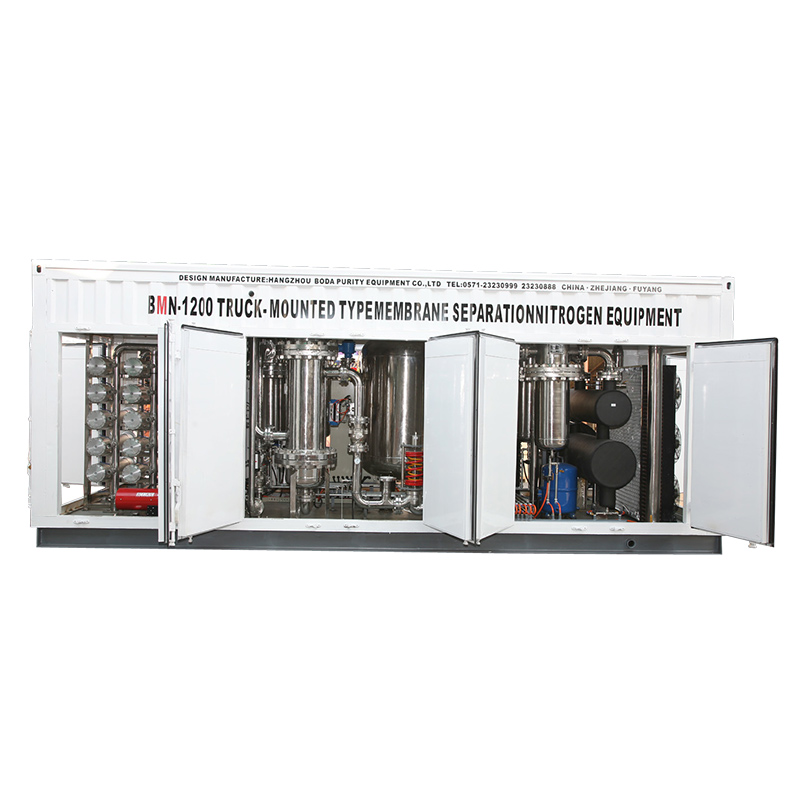
- Installation type: floor-mounted, skid-mounted, containerized, or modular
- Applicable standards: project-specific pressure, electrical, safety, and quality requirements
- Scope of supply: clearly identify included and excluded equipment
Applicable standards should be confirmed according to the destination country and project conditions. For example, ISO 8573-1 can be relevant when specifying compressed-air cleanliness, while pressure equipment and electrical requirements may be governed by regional regulations or project-specific standards.
A professional quotation should also identify assumptions. This makes competing offers technically comparable and helps prevent unexpected additional costs after the purchase order is issued.
How Can Buyers Get a More Accurate PSA Nitrogen Generator Price?
A reliable budget estimate starts with actual operating data rather than a generic request for “one nitrogen generator.” The buyer should provide the intended application, nitrogen consumption, purity, pressure, operating schedule, installation location, and whether existing compressed air is available.
For example, the following information allows a supplier to make a much more meaningful calculation:
- Application: blanketing, purging, heat treatment, laser cutting, food packaging, oil and gas, or another process
- Required flow: average and peak demand
- Required purity: target nitrogen concentration
- Required pressure: generator outlet and point of use
- Existing utilities: compressor, dryer, receiver, power supply
- Preferred installation: standalone, skid-mounted, or containerized
- Annual operating hours
- Future production expansion plans
With this information, BODA GAS can evaluate the appropriate nitrogen generator configuration instead of providing an unrealistic headline price. The final PSA nitrogen generator cost should reflect the actual performance required by the process, the complete equipment scope, and the expected lifecycle economics.
Conclusion
The right PSA nitrogen generator price is not the lowest quotation. It is the price of a correctly engineered system that delivers reliable nitrogen gas with controlled energy and maintenance costs. Contact BODA GAS with your flow, purity, pressure, and operating requirements for a project-specific technical and commercial quotation.